
A road roller drum is the heavy steel cylinder that presses soil, gravel, asphalt, or other ground material into a tighter and stronger surface. It may look simple from the outside, but the drum is one of the most important parts of any road roller.
For buyers, operators, and business owners, understanding the drum helps you choose the right machine for the job. The wrong drum can slow down work, leave weak spots, or create a poor finish. The right drum makes compaction cleaner, faster, and more consistent.
What Is a Road Roller Drum?
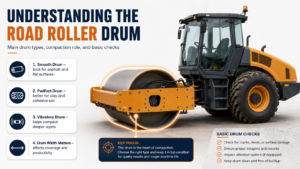
A road roller drum is the round metal roller at the front, rear, or both ends of a road roller. Its job is to apply weight and pressure to the ground. On many machines, the drum also uses vibration to help compact deeper layers.
Some road rollers have one drum and rear tires. Others have two drums, one in the front and one in the back. Smaller rollers may use narrow drums for tight spaces, while larger machines use wide drums for roads, parking lots, and bigger job sites.
The drum does not only “roll over” the surface. It helps remove air gaps between material particles. This is what makes the ground stronger and more stable.
Why the Drum Matters for Compaction
Good compaction depends on pressure, drum size, drum type, vibration, and the material being compacted. A heavy drum can press material down with more force. A vibrating drum can help compact deeper than static weight alone.
For asphalt work, the drum needs to create a smooth and even finish. For soil work, the drum may need to break up loose material and push it together firmly. This is why not every roller drum works well for every job.
A road roller drum affects:
- How deep the compaction reaches
- How smooth the finished surface looks
- How many passes the operator needs
- Whether the machine works better on soil, gravel, or asphalt
- How much pressure is applied across the surface
Using the wrong drum may still compact the surface, but it may not compact it evenly. That can lead to soft areas, cracking, or future repair work.
Common Types of Road Roller Drum
There are several types of drums used on road rollers. Each one is built for a different kind of material and job site.
Smooth Drum
A smooth drum has a flat steel surface. It is commonly used for asphalt, gravel, sand, and some mixed soil jobs. It gives a clean finish, which makes it useful for road construction, driveways, parking lots, and surface layers.
Smooth drum rollers are often available as single drum or double drum machines. A double drum roller is popular for asphalt because both drums help create a flat and even surface.
Padfoot Drum
A padfoot drum has raised pads or knobs on the surface. These pads press into the soil and knead it as the roller moves. This type is mainly used for clay, heavy soil, and cohesive material.
Padfoot drums are not used when a smooth finish is needed. They are made for deeper soil compaction, not final surface finishing.
Vibratory Drum
A vibratory drum shakes while rolling. The vibration helps particles settle closer together. This can improve compaction depth and reduce the number of passes needed.
Many modern road rollers use vibratory drums because they are more efficient than static rollers for many jobs. Operators still need to control vibration carefully, especially near buildings, pipes, or finished surfaces.
Static Drum
A static drum uses the machine’s weight without vibration. It is useful when vibration is not needed or could cause damage. Static rolling is also common for final finishing passes on asphalt.
Smooth Drum vs Padfoot Drum
The biggest choice for many buyers is smooth drum or padfoot drum.
A smooth drum is better for granular materials and finished surfaces. Use it for asphalt, gravel, sand, and road surface work. It leaves a flatter result and is easier to use when appearance matters.
A padfoot drum is better for clay and sticky soil. The raised pads dig into the ground and compact from inside the layer instead of only pressing the surface. It is a strong choice for site preparation, embankments, and foundation work.
Here is the simple rule:
Use a smooth drum when you need a clean surface.
Use a padfoot drum when you need stronger compaction in clay or cohesive soil.
Some machines can also use shell kits or drum conversion options, but buyers should check compatibility before assuming the machine can switch drum types.
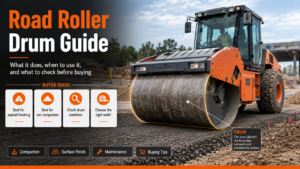
What to Check Before Buying a Road Roller
Before buying a road roller, do not only look at engine power or machine size. The drum should match the work you plan to do most often.
Start with the material. Asphalt, gravel, sand, clay, and mixed soil do not compact the same way. A roller that works well on asphalt may not be the best choice for heavy clay.
Then check the drum width. A wider drum covers more area and can improve productivity on large jobs. A narrower drum is easier to control in tight spaces, small roads, landscaping work, and repair jobs.
Also look at operating weight. Heavier rollers apply more force, but bigger is not always better. A machine that is too heavy can damage thin asphalt layers or be hard to transport.
For used machines, inspect the drum surface carefully. Deep dents, cracks, uneven wear, or heavy rust can affect the finish and compaction quality. Also check the scraper bars, water spray system, vibration system, and drum bearings.
A buyer should ask:
- What material will this roller compact most often?
- Is the job mostly asphalt, soil, or gravel?
- Do I need a smooth finish or deep soil compaction?
- Is the drum width right for my job sites?
- Is the vibration system working properly?
- Are there visible cracks, dents, or leaks around the drum area?
These checks can prevent expensive mistakes.
Basic Road Roller Drum Maintenance Tips
A road roller drum works in rough conditions, so basic maintenance matters. Dirt, asphalt buildup, and worn parts can affect how the roller performs.
Keep the drum clean after use. Asphalt buildup can leave marks on future surfaces. Soil and debris can also hide damage or create uneven contact with the ground.
Check the scraper bars regularly. Scrapers help keep material from sticking to the drum. If they are worn or poorly adjusted, the drum may not stay clean during operation.
For asphalt rollers, the water spray system is important. Water helps stop hot asphalt from sticking to the drum. Blocked spray nozzles or an empty water tank can quickly create surface problems.
Operators should also listen for unusual vibration, grinding, or knocking sounds. These may point to bearing issues, loose parts, or vibration system problems.
Simple maintenance habits include:
- Cleaning the drum after work
- Checking for cracks or dents
- Inspecting scraper bars
- Keeping spray nozzles clear
- Watching for oil leaks near the drum
- Following the machine’s service schedule
Good maintenance keeps the roller safer, smoother, and more reliable.
Final Thoughts
The road roller drum is more than a heavy steel cylinder. It decides how the machine presses, finishes, and stabilizes the surface. For asphalt, a smooth drum is usually the right choice. For clay and heavy soil, a padfoot drum often works better.