
Excavator digging looks simple from a distance, but good digging takes planning, control, and the right setup. A skilled operator does not just pull soil from the ground. They position the machine correctly, choose the right bucket, watch the ground condition, and work in a way that protects people, pipes, equipment, and the machine itself.
For beginners, excavator digging can feel rough at first. The machine may move too fast, the bucket may cut too deep, or the trench may come out uneven. Most of these problems can be fixed by understanding the basics.
This guide explains how excavator digging works, how to prepare before digging, and what mistakes to avoid on the jobsite.
What Is Excavator Digging?
Excavator digging is the process of using an excavator bucket to cut, scoop, lift, and remove soil or other ground material. It is used in construction, landscaping, road work, farming, utility work, demolition cleanup, drainage, and property development.
Common digging jobs include:
- Trenching for pipes or cables
- Digging foundations
- Removing soil for grading
- Cleaning ditches
- Digging ponds or drainage areas
- Removing stumps and roots
- Loading soil into trucks
- Preparing land for construction
The size of the excavator depends on the job. A mini excavator is useful for small spaces, landscaping, residential work, and shallow trenches. A larger excavator is better for deep digging, heavy soil, large foundations, and high-production jobs.
The goal is not only to dig fast. The goal is to dig accurately, safely, and without putting extra stress on the machine.
How an Excavator Digs
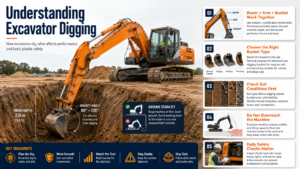
An excavator digs by using the boom, arm, bucket, and hydraulic system together.
The boom raises and lowers the front working equipment. The arm moves the bucket closer or farther from the machine. The bucket cuts into the ground, fills with material, and carries the load. The hydraulic system gives the machine the force needed to move soil, clay, gravel, sand, or broken material.
Good digging is about smooth movement. The operator usually lowers the boom, extends the arm, curls the bucket into the soil, then pulls the material toward the machine. Once the bucket is full, the operator lifts, swings, and dumps the material into a pile, truck, or nearby area.
The bucket should not be forced too hard. If the machine is struggling, the operator may be digging too deep, using the wrong bucket, or working in soil that needs to be loosened first.
Preparing the Jobsite Before Digging
Before any excavator digging starts, the jobsite needs to be checked. This step is important because many digging accidents happen before the operator even begins the first cut.
First, check for underground utilities. Pipes, gas lines, electric cables, water lines, and communication lines can be hidden under the surface. Digging without checking can cause serious damage and safety risks.
Next, inspect the ground. Soft soil, wet areas, slopes, loose gravel, and filled ground can affect machine stability. If the excavator is not stable, digging becomes harder and more dangerous.
Clear the work area before starting. Remove people, tools, loose objects, and vehicles from the swing area. The rear of the excavator can swing into nearby objects if the operator is not careful.
Also think about where the dug material will go. A spoil pile that is too close to the trench can add weight to the edge and increase the risk of collapse. Keep material at a safe distance from trench edges.
Good preparation makes the digging work cleaner and safer.
Choosing the Right Bucket for the Job
The bucket has a big effect on digging performance. A bucket that is too wide may move more soil, but it can make the machine work harder. A bucket that is too narrow may be accurate, but it can slow down the job.
A standard digging bucket is used for general soil work. It is good for normal digging, trenching, and loading loose material.
A trenching bucket is narrow and useful for pipe trenches, drainage lines, irrigation work, and utility jobs. It helps make a cleaner trench with less extra digging.
A grading bucket is wider and smoother. It is better for shaping, backfilling, leveling, ditch cleaning, and finishing work.
A rock bucket or heavy-duty bucket is better for hard soil, gravel, rocky ground, and rough jobsite conditions. It usually has stronger teeth and thicker material.
For smaller machines, bucket size matters even more. A mini excavator can dig well, but an oversized bucket may reduce power and make the machine unstable. Always match the bucket to the excavator’s size and the soil type.
Basic Excavator Digging Techniques
Good excavator digging starts with machine position. The excavator should sit on stable ground, with the tracks placed in a way that gives good balance. When digging a trench, operators often line the tracks up with the trench direction for better control.
Start with shallow cuts. Do not try to take too much material in one pass. Smaller, controlled cuts are easier on the machine and usually make the work cleaner.
Keep the bucket angle correct. The teeth should cut into the ground, not scrape flat across the surface or bite too deep too quickly. A proper angle helps the bucket fill smoothly.
Use the arm and bucket together. Pulling only with one movement can make digging rough. Smooth coordination between the boom, arm, and bucket gives better control and reduces wasted movement.
Avoid overreaching. The farther the bucket is from the machine, the less stable and powerful the excavator becomes. Move the machine when needed instead of stretching too far.
When loading a truck or making a spoil pile, keep the swing smooth and controlled. Fast swinging wastes energy and increases risk, especially with a full bucket.
For trenching, keep checking depth and line. Small mistakes are easier to fix early than after the trench is already too deep or off direction.
Common Digging Mistakes to Avoid
One common mistake is digging too deep in one pass. This can overload the bucket, slow the machine, and make the trench harder to control.
Another mistake is using the wrong bucket. A wide bucket in hard ground can make the excavator struggle. A narrow bucket may waste time when the job needs bulk soil removal.
Some beginners dig without planning where the soil will go. This creates messy piles, blocks access, and can make the jobsite harder to manage.
Over-swinging is another problem. Swinging too fast with a full bucket can make the machine unstable and increase wear on the swing system.
Operators should also avoid using the bucket as a hammer. An excavator bucket is made for digging and scooping, not striking. Using it incorrectly can damage pins, bushings, teeth, and hydraulic parts.
Another serious mistake is digging near trench edges without care. The ground can collapse, especially in wet, loose, or unsupported soil. Keep the machine and spoil pile away from weak edges.
Safety Tips for Excavator Digging
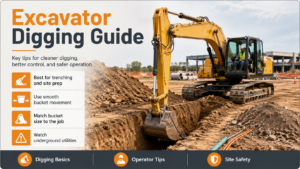
Safety should be part of every digging job, even small ones.
Always do a machine walkaround before starting. Check the tracks, bucket, teeth, pins, hydraulic hoses, fluid leaks, lights, mirrors, and controls. Small problems can become serious once the machine is working.
Keep people outside the swing radius. The operator may not see someone standing near the rear or side of the machine.
Never dig without checking for underground utilities. This is one of the most important rules in excavation work.
Be careful on slopes. Digging on uneven ground can affect balance. If the machine feels unstable, stop and reposition.
Watch for trench collapse. Deep trenches may need proper support, sloping, or shielding depending on soil and job conditions.
Use slow, controlled movements near buildings, fences, pipes, walls, and vehicles. Rushing in tight areas usually causes damage.
Operators should also wear proper safety gear and follow site rules. A safe digging job is not only about the machine. It is about the people working around it too.
Conclusion
Excavator digging is easier when the machine, bucket, operator, and jobsite are properly prepared. Good digging is not about rushing. It is about using smooth control, choosing the right bucket, checking the ground, and working safely.
For beginners, start with simple movements and shallow cuts. As control improves, the work becomes cleaner, faster, and more accurate. Whether you are digging a trench, foundation, drainage line, or small landscaping area, the basics stay the same: plan first, dig with control, and keep safety in mind.