
A mini skid steer loader is a small but useful machine for jobs where a full-size skid steer is too large. It can move soil, carry materials, clean up job sites, dig small areas, and run different attachments. For many landscapers, contractors, farms, rental companies, and property owners, it is a practical machine because it can work in tight spaces without needing a large trailer or a big crew.
This guide explains what a mini skid steer loader does, where it makes sense, and what to check before buying or using one.
What Is a Mini Skid Steer Loader?
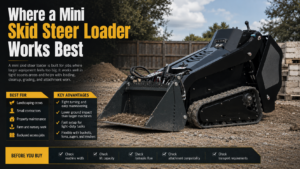
A mini skid steer loader is a compact loading machine with lift arms at the front. It is usually smaller and lighter than a standard skid steer loader. Some models have tracks, while others use wheels. Many are stand-on machines, where the operator stands on a rear platform instead of sitting inside a cab.
The main job of the machine is simple: lift, carry, push, dig, and power attachments. Because it is narrow and easy to move, it works well in places where bigger equipment would damage the ground or struggle to fit. This is why mini skid steers are common in landscaping, backyard work, light construction, nursery work, and property maintenance.
A mini skid steer loader is not made to replace a large skid steer on every job. It has less lifting capacity and less weight behind it. But when the job is small, narrow, or sensitive to ground damage, the smaller size becomes a real advantage.
Common Jobs a Mini Skid Steer Loader Can Handle
A mini skid steer loader is useful for more than just moving dirt. With a bucket, it can move mulch, gravel, sand, soil, debris, and small piles of construction material. This makes it helpful for cleanup work, garden projects, small grading jobs, and loading material into a trailer or truck.
With the right attachment, it can also dig holes, trench for irrigation lines, carry pallets, remove brush, grade driveways, and prepare small work areas. Many businesses use mini skid steers because one machine can support several types of work during the same day.
For example, a landscaping crew might use the machine to unload pallets, move soil into a backyard, spread mulch, and clean up waste at the end of the job. A full-size loader may be stronger, but it may not fit through a gate or move safely on a finished lawn. That is where the smaller machine earns its place.
Why Size Matters More Than Power Alone
When people compare machines, they often look at engine power first. Power matters, but size, weight, width, and lifting capacity usually matter more in daily use.
A narrow mini skid steer loader can pass through tight gates, work beside buildings, and move around yards without tearing up as much ground. A tracked model can spread its weight better, which helps on soft soil or uneven surfaces. A wheeled model may be better on hard surfaces where speed and simple maintenance matter more.
Lift height is also important. If the machine needs to load material into a truck or dumpster, check whether it can reach high enough. Rated operating capacity matters too. A machine that is too small may feel unstable when carrying heavy loads, especially on slopes or rough ground.
The best machine is not always the strongest one. It is the one that fits the work area, handles the load safely, and can use the attachments you need.
Attachments That Make the Machine More Useful
Attachments are one of the biggest reasons people choose a mini skid steer loader. A basic bucket is useful, but the machine becomes much more flexible when it can run different tools.
Common attachments include buckets, pallet forks, augers, trenchers, grapples, brush cutters, land levelers, and hydraulic breakers. A bucket is good for moving loose material. Forks help with pallets, bags, and bundled items. An auger is useful for fence posts, planting, and small foundation work. A trencher can help with irrigation, drainage, and utility prep.
Before buying attachments, check the machine’s hydraulic flow, quick-attach style, lifting capacity, and overall balance. Not every attachment works well on every mini skid steer. A heavy attachment can reduce how much material the machine can safely carry. A tool that needs strong hydraulic flow may feel weak if the machine cannot supply enough oil.
It is better to match the attachment to the machine first, instead of buying tools and hoping they fit later.
What to Check Before Buying a Mini Skid Steer Loader
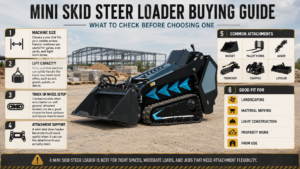
Before buying a mini skid steer loader, start with the kind of work you do most often. A machine used for landscaping may need low ground pressure and good attachment options. A machine used for construction cleanup may need stronger lift capacity, a tough bucket, and easy service access.
Check the operating weight, machine width, rated operating capacity, lift height, engine type, hydraulic flow, and track or tire setup. Also look at service points. Filters, grease points, battery access, and hydraulic hoses should be easy to reach. A machine that is hard to service may cost more time later.
Used machines need extra attention. Look for worn tracks or tires, leaking hydraulic hoses, loose pins, weak lift arms, engine smoke, rough starts, and damaged controls. Test the machine under load, not just at idle. Lift a bucket, drive forward and backward, turn both directions, and check if the hydraulics respond smoothly.
For business owners, also think about transport. A mini skid steer is easier to move than larger equipment, but you still need the right trailer, tie-down points, and towing setup.
Basic Operating Tips for New Users
A mini skid steer loader is easier to learn than many larger machines, but it still needs careful operation. New operators should start on flat, open ground before working near walls, slopes, fences, vehicles, or people.
Keep loads low while driving. A raised bucket can make the machine feel unstable, especially when turning or moving over uneven ground. Slow turns are safer and cleaner, especially on lawns or finished surfaces. On slopes, avoid sudden moves and do not carry heavy loads high in the air.
Operators should also understand the attachment before using it. A bucket, auger, grapple, and trencher all behave differently. Each one changes the machine’s balance and visibility. Before starting work, check the area for underground lines, soft spots, loose debris, and people walking nearby.
Simple habits matter. Inspect the machine before use, keep the platform clean, watch the load, and stop if the machine feels unstable.
Is a Mini Skid Steer Loader Right for You?
A mini skid steer loader makes sense if you often work in tight areas, move moderate loads, and need one machine that can handle different jobs. It is especially useful for landscaping, small construction, farms, property care, nurseries, and rental fleets.
It may not be the right choice if most of your work involves heavy lifting, large piles of material, deep digging, or constant loading into tall trucks. In those cases, a full-size skid steer, compact track loader, wheel loader, or excavator may be a better fit.
The smart choice comes down to the job site. If access is narrow, ground damage matters, and attachments are part of your work, a mini skid steer loader can be a very practical machine. Choose the size carefully, match the attachments properly, and make sure the machine can handle the work you plan to do most often.
Conclusion:
A mini skid steer loader is not the biggest machine on a job site, but it can save a lot of time when the work area is tight and the tasks change often. For buyers, the key is to look beyond engine power and focus on fit, lift capacity, hydraulic performance, attachments, and service access. For operators, safe habits and the right attachment setup make the machine much more useful.
Suggested internal links for machinery.org:
Guide page: Skid Steer Loader Buying Guide
Machine guide page: Mini Skid Steer Loader Machine Guide
Category page: Skid Steer Loaders