
Why Water-Cooled Diesel Engines Improve Skid Steer Performance
The engine is the heart of any skid steer, and how it manages heat decides how hard and how long it can work. Water-cooled diesel engines keep temperatures steady through the toughest conditions, which is exactly why they power most serious skid steers on the job today. For contractors who demand consistent output hour after hour, that cooling system is more than a detail. It’s the foundation of reliable performance.
By maintaining a stable operating temperature, a water-cooled diesel engine helps the skid steer deliver dependable power across a wide range of applications, from heavy material handling to demanding attachment work. Consistent cooling not only supports engine efficiency but also reduces stress on critical components during extended operating periods.
This guide explains what a water-cooled diesel engine is and why it matters in a skid steer. You’ll learn how it differs from air-cooled designs, the real performance benefits it delivers, the trade-offs worth knowing, and how to choose and care for one. By the end, you’ll understand why this engine type has become the standard for demanding work.
What a Water-Cooled Diesel Engine Is
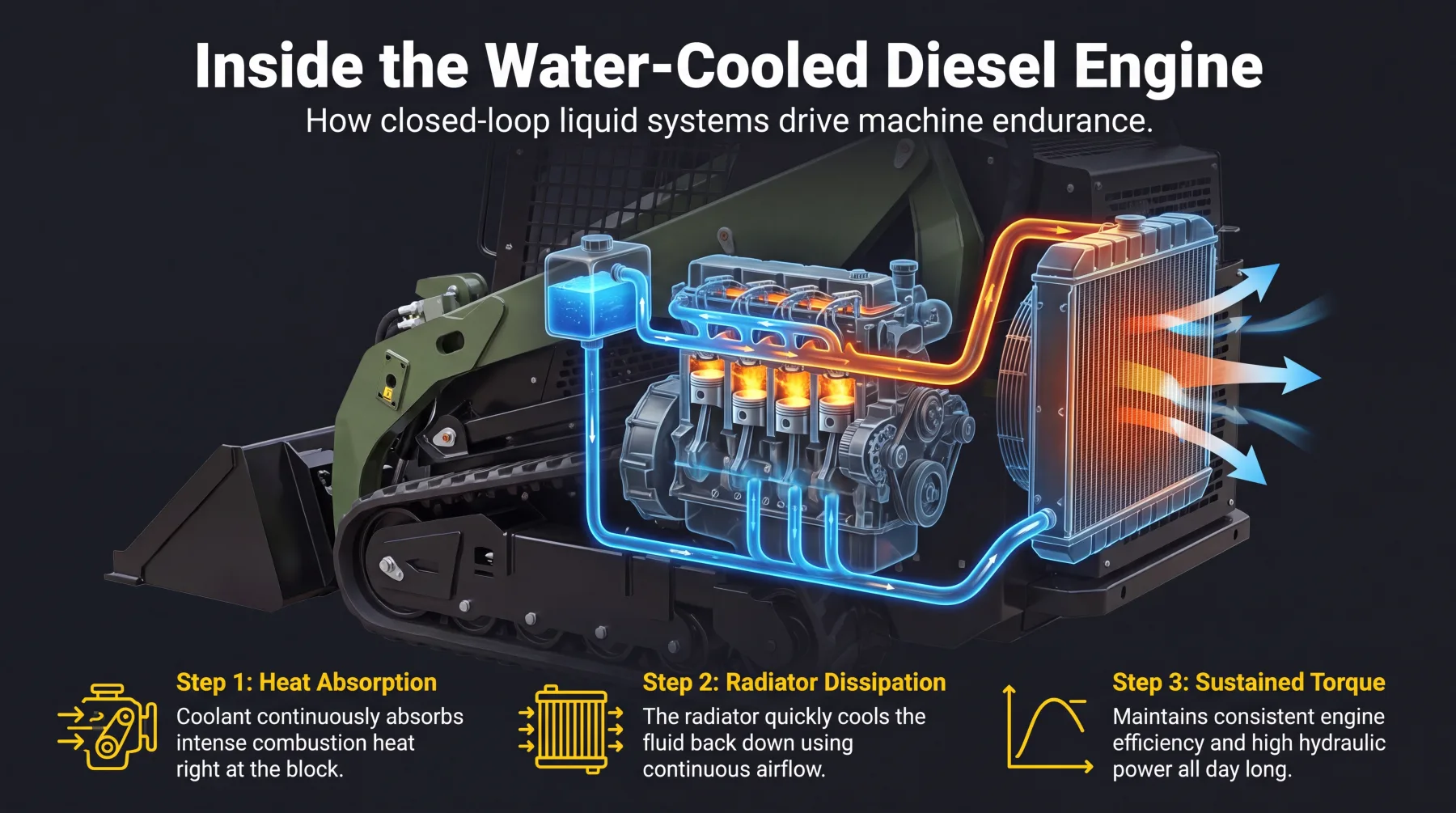
Before you can judge the benefits, it helps to understand what this engine actually does. The concept is straightforward once you picture how heat moves through the machine.
Unlike engines that rely solely on airflow to dissipate heat, a water-cooled diesel engine uses a closed cooling system to regulate operating temperatures more precisely. This controlled cooling process allows the engine to maintain consistent performance under varying workloads, making it well suited for skid steers that spend long hours performing demanding construction, landscaping, and material-handling tasks.
The Basics of Liquid Cooling
A water-cooled diesel engine uses a liquid coolant, usually a mix of water and antifreeze, to carry heat away from the engine block. The coolant circulates through passages around the cylinders, absorbs the heat created by combustion, and then passes through a radiator where airflow cools it back down. That cycle repeats constantly while the engine runs.
This steady loop keeps the engine within a narrow temperature range. Instead of letting heat build up, the system pulls it away the moment it forms, which protects the engine during long, hard work.
Why Diesel and Water Cooling Pair Well
Diesel engines produce strong torque and run under heavy load, which generates a lot of heat. A liquid cooling system handles that heat far better than air alone, especially during sustained operation. The pairing gives you an engine built for endurance.
The stable operating temperatures provided by water cooling also help the engine maintain consistent power output during long workdays. Instead of losing efficiency as heat builds, the engine can continue delivering reliable performance for demanding tasks such as lifting, digging, grading, and operating high-flow hydraulic attachments.
That’s why most full-size and high-output skid steers rely on water-cooled diesel power. The combination matches the demands of real jobsite work.
Key Performance Benefits
The reason water-cooled diesel engines power most serious skid steers comes down to clear, daily advantages. These benefits show up in productivity, reliability, and the cost of running the machine.
These advantages become especially noticeable on demanding jobs where the engine operates under continuous load for extended periods. A well-regulated cooling system allows the skid steer to maintain dependable performance throughout the workday, helping operators stay productive with fewer interruptions.
Consistent Temperature Regulation
The biggest benefit is steady operating temperature. By pulling heat away the moment it forms, the cooling system keeps the engine in its ideal range no matter how hard you push it. That stability protects internal components and keeps performance consistent from the first hour to the last.
Efficient temperature management also helps maintain proper lubrication throughout the engine. By preventing excessive heat buildup, the cooling system allows engine oil to perform effectively, reducing friction and minimizing wear on critical moving parts.
Steady temperatures also mean the engine performs the same in summer heat as it does in milder conditions. You get dependable output regardless of the weather.
Longer Engine Life
Heat is one of the biggest enemies of any engine. By controlling temperature so precisely, water heat is one of the biggest enemies of any engine. By controlling temperature so precisely, water cooling reduces thermal stress on pistons, seals, and other components. That gentler operating environment extends the engine’s service life and lowers long-term repair costs.
Reduced thermal stress also helps preserve important engine tolerances and component clearances over time. Keeping internal parts within their designed operating temperatures minimizes premature wear, allowing the engine to deliver reliable performance throughout its service life.
Protecting the engine from extreme heat pays off over years of use. A cooler engine simply lasts longer. Staying on top of routine skid steer diesel engine maintenance best practices helps you get the full benefit of that durability.
Better Fuel Efficiency
An engine held at its ideal temperature burns fuel more efficiently. Proper thermal conditions support clean, complete combustion, which means more work from every gallon. Over a busy season, that efficiency adds up to meaningful savings.
Maintaining consistent operating temperatures also helps the engine deliver stable power without using excess fuel to compensate for heat-related performance losses. This improved efficiency benefits both productivity and overall operating costs, particularly for contractors who rely on their skid steers every day.
Efficient combustion also produces cleaner emissions, helping the engine meet modern standards while keeping running costs down.
Trade-Offs Worth Understanding
No engine design is perfect for every situation, and being honest about the trade-offs helps you make a smart choice. Knowing the limits lets you match the machine to your real workload.
Understanding both the advantages and maintenance requirements allows you to plan ownership costs more effectively. When properly maintained, the additional components in a water-cooled system provide long-term reliability that often outweighs the extra service involved.
More Components to Maintain
A water-cooled system has more parts than an air-cooled one. The radiator, water pump, hoses, thermostat, and coolant all need attention over time. That means a few more maintenance points to track during your service routine.
Routine inspections make it easier to detect worn hoses, coolant leaks, or debris blocking the radiator before they affect engine performance. Addressing these small issues early helps prevent overheating and reduces the risk of more expensive repairs later.
The upside is that these components are well understood and easy to service. With regular checks, the system stays reliable for the long haul.
Higher Upfront Cost
Machines with water-cooled diesel engines often carry a higher price than basic air-cooled models because of the added engineering. That said, the value usually justifies the cost when your work demands sustained power and long engine life. Fewer breakdowns and better fuel economy help repay the investment over time.
Think about the full picture rather than the sticker price alone. For contractors who work their machines hard, the performance and durability gains are worth it.
Coolant Management
Because the system relies on coolant, you have to keep that fluid clean and at the right level. Old or low coolant reduces cooling performance and can lead to overheating. Staying on top of coolant conditions is a small but essential responsibility.
Using the correct coolant recommended by the manufacturer is equally important. The proper coolant mixture helps regulate engine temperature, protects against corrosion inside the cooling system, and maintains reliable performance throughout changing weather conditions.
Operator and Maintenance Tips
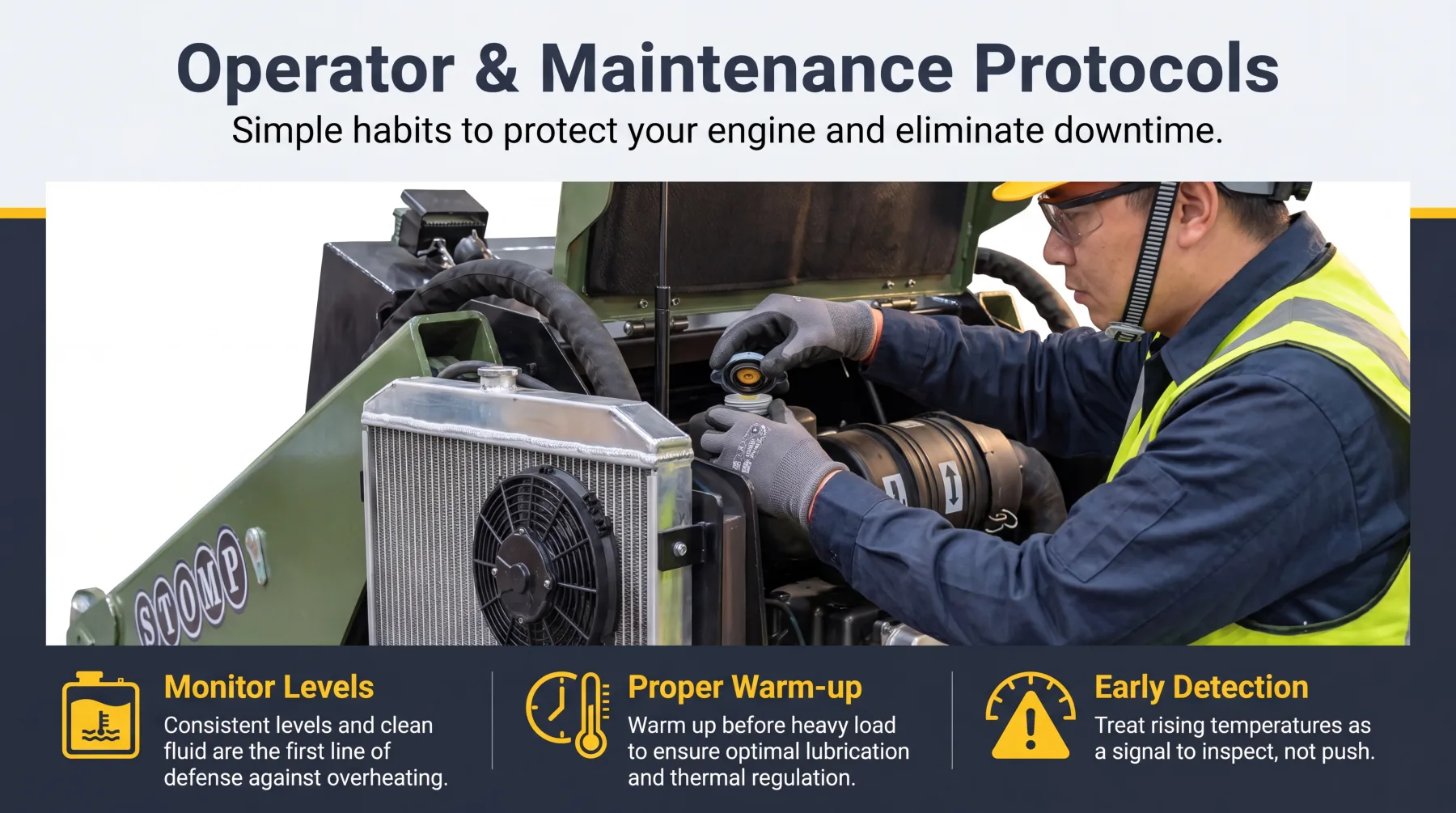
Owning the right engine is only half the equation. Sound habits help you capture every bit of performance and protect the cooling system for years. Consistent preventive maintenance not only extends engine life but also reduces the likelihood of unexpected downtime on the jobsite. Simple daily inspections and timely servicing help keep the cooling system operating efficiently under demanding conditions.
Check Coolant Regularly
Make coolant a part of your routine inspection. Confirm the level sits within the marks and watch for any drop that could signal a leak. Never open a hot radiator cap, and let the engine cool first to get an accurate reading safely.
It’s also a good idea to inspect the coolant for discoloration or contamination during routine checks. Clean coolant should appear consistent in color, while rust, debris, or oil contamination may indicate problems that require immediate attention.
Warm Up Before Heavy Work
Let the engine reach operating temperature before pushing it hard. A brief warm-up lets the coolant circulate and the engine settles into its ideal range, which protects components and supports smooth performance. Working an engine hard while cold adds unnecessary wear.
Allowing the engine to warm gradually also helps engine oil reach its optimal operating condition, ensuring proper lubrication for internal components. This simple habit reduces mechanical stress and supports long-term engine reliability.
Watch the Temperature Gauge
Your temperature gauge is an early warning system. Keep an eye on it during work, and treat any climb toward the hot zone as a signal to stop and investigate. Catching an overheating issue early prevents serious engine damage.
If the temperature begins rising unexpectedly, inspect the radiator, coolant level, and airflow around the cooling system before continuing operation. Responding quickly to warning signs can prevent minor cooling issues from developing into costly engine repairs.
Conclusion
A water-cooled diesel engine is what lets a skid steer perform hard, steady work without buckling under heat. By holding the engine at its ideal temperature, it delivers sustained power, longer service life, and better fuel efficiency than air-cooled alternatives can offer in demanding conditions. That cooling capability translates directly into dependable output, lower running costs, and the confidence to push the machine through a full day’s work.
Whether you’re handling heavy construction, landscaping, material handling, or agricultural projects, a well-maintained water-cooled diesel engine provides the reliability needed to keep productivity high. Its ability to manage heat efficiently under continuous workloads makes it a dependable choice for operators who expect consistent performance in challenging jobsite conditions.
The smart move is matching the engine to your workload, choosing a machine with easy service access, and staying on top of coolant and radiator care. Check your coolant, keep the radiator clean, warm up before heavy work, and watch your temperature gauge. Build those habits now, and a water-cooled diesel engine will reward you with reliable, high-performing operation on every job your business takes on.