
How Track Width Impacts Excavator Stability
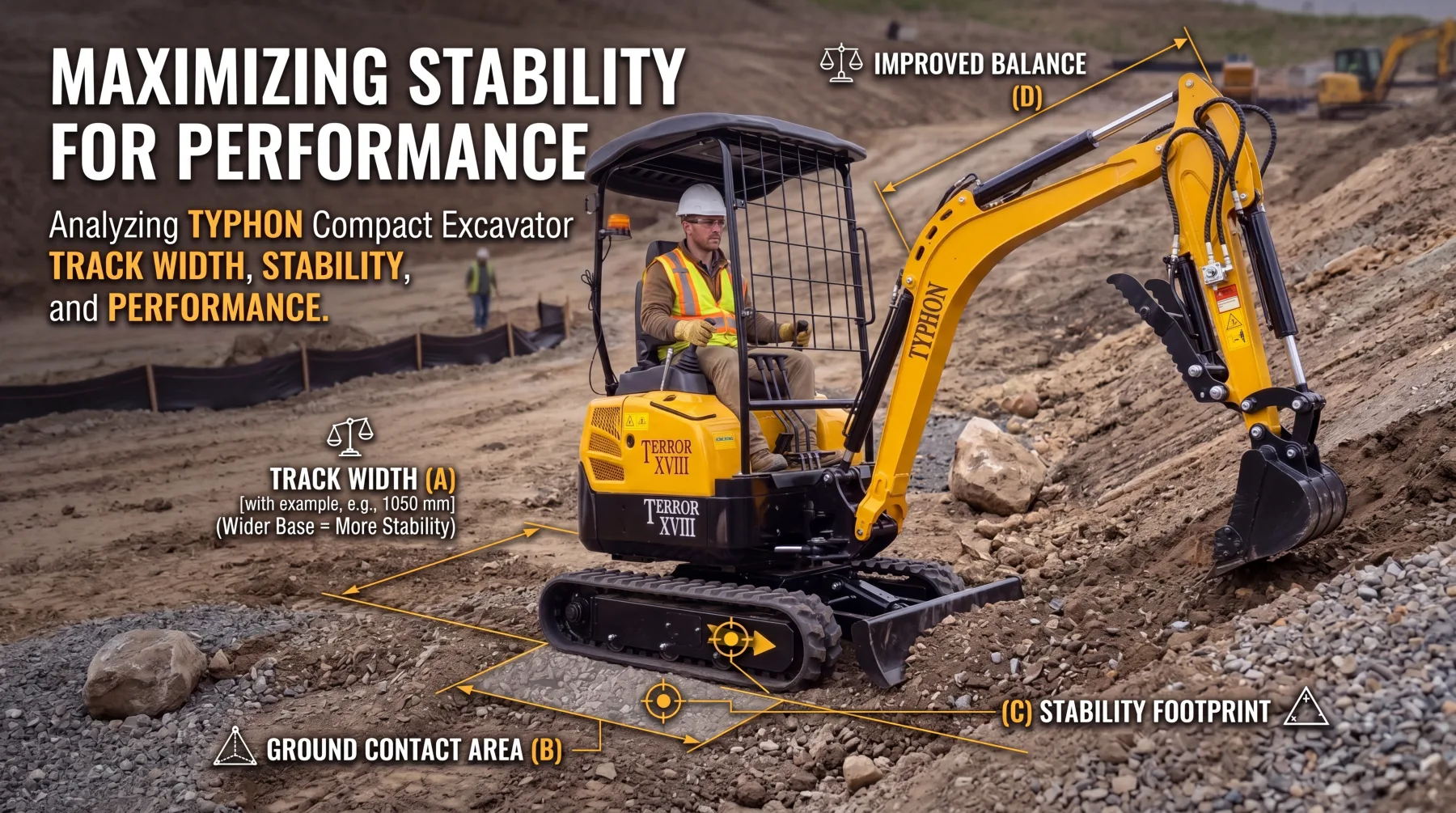
The stance an excavator takes on the ground shapes almost everything about how it performs. A machine planted on a wide, stable base digs and lifts with confidence, while one perched on a narrow footprint may feel twitchy under load yet slip easily into places a wider machine could never reach. Track width sits at the center of this balance, quietly influencing stability, mobility, and safety on every job. Understanding how it works helps operators and buyers choose equipment that matches their conditions rather than fighting against them. This guide explains what track width is, how wider tracks improve stability, the trade-offs involved, how ground conditions come into play, and how to select the right width for your work.
Understanding Excavator Track Width
Track width is the distance between the outer edges of an excavator’s tracks, and it forms the machine’s base of support. Think of it as the footprint the excavator stands on. Just as a person with feet planted wide apart feels steadier than one standing with feet close together, an excavator’s stance determines how securely it holds its ground. This single measurement quietly shapes how the machine behaves throughout its working day, from the confidence it shows under load to the ease with which it slips into tight spaces.
The relationship between track width and performance follows a clear pattern that guides nearly every decision about machine configuration:
- A wider track stance generally improves stability, giving the machine a broader, more secure base.
- A narrower design enhances maneuverability, letting the excavator work and travel in confined spaces.
This is why track width is never a throwaway specification. It represents a deliberate balance between two qualities that pull in opposite directions, and the right choice depends entirely on the work at hand. A machine built for steadiness carries a wider stance, while one built to reach cramped areas trades some of that steadiness for a slimmer profile.
Understanding this foundation helps you read an excavator’s capabilities more accurately. Rather than viewing track width as a fixed number on a spec sheet, you can see it as a signal of how the machine will feel and perform in real conditions. A wide base tells you the excavator is built to stay planted through demanding work, while a narrow one tells you it is designed to move and fit where space is scarce. Grasping this principle sets the stage for everything that follows, because it explains why wider tracks build stability, why that stability comes at a cost, and how to weigh those factors against your own job sites.
How Wider Tracks Improve Stability
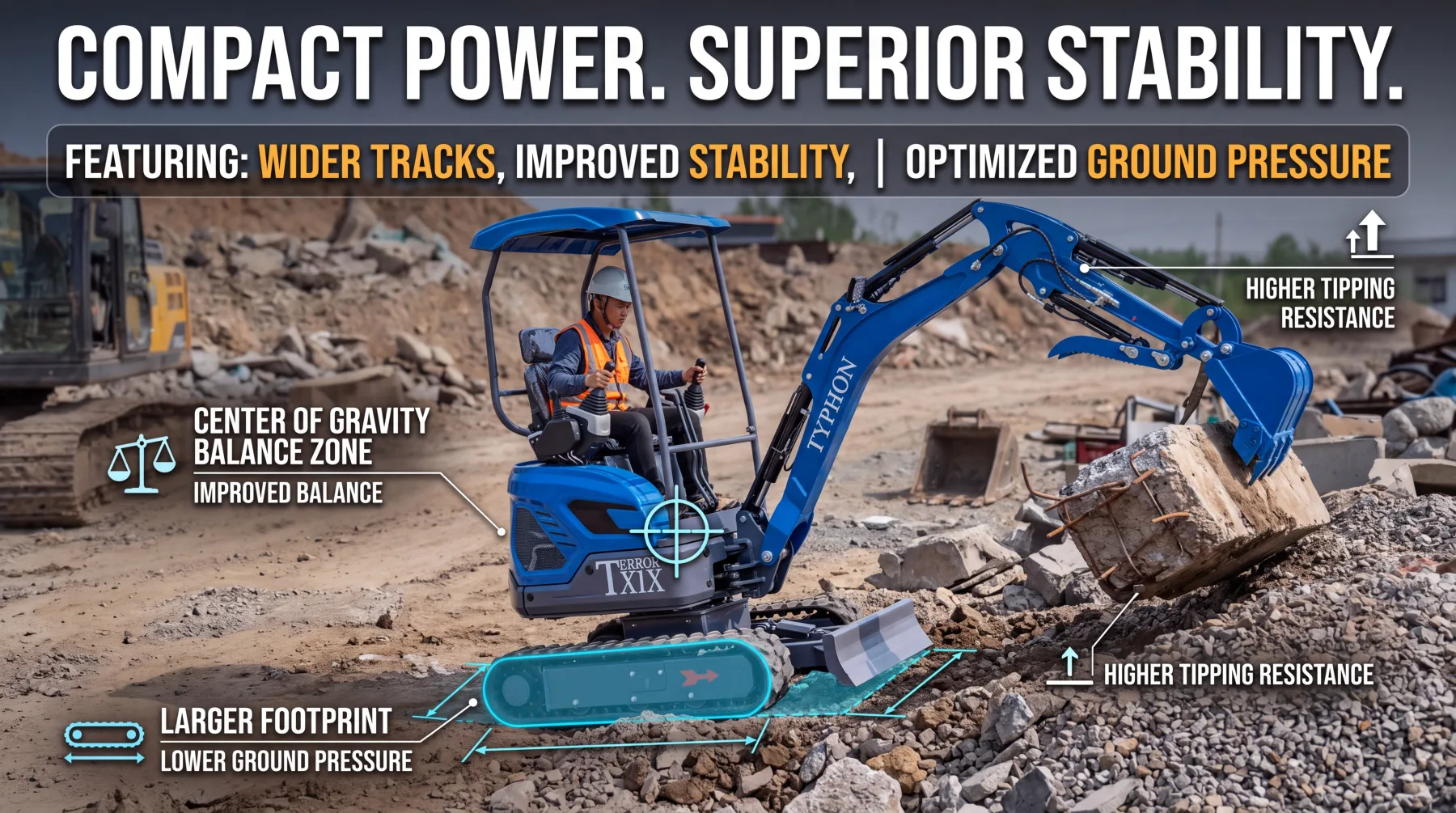
Wider tracks improve stability through a simple, dependable principle: they distribute the machine’s weight over a larger surface area. When the same weight rests on a broader footprint, the load on any given patch of ground drops, which reduces ground pressure and helps the machine stay planted rather than sinking or shifting. That larger base also spreads the excavator’s mass farther from its center, and that added spread is what gives a wide-track machine its steady, confident feel when the work turns demanding.
The most valuable benefit of this wider stance is increased resistance to tipping. As an excavator lifts, swings, and reaches, its center of gravity shifts, and a wider base gives the machine more room to absorb those shifts without becoming unstable. The forces that would threaten to tip a narrow machine are far better contained when the tracks sit wide apart, keeping the excavator secure through the full range of its motion.
This stability proves especially beneficial in two demanding situations where confidence matters most:
- Lifting heavy loads, where a wide base counters the tipping forces created by weight held out at reach.
- Working on uneven terrain, where a broader footprint helps the machine stay level and secure on ground that would unsettle a narrower stance.
Taken together, these advantages explain why wider tracks are so often the choice for serious, load-intensive work. Reduced ground pressure protects both the machine and the surface it works on, while greater tipping resistance keeps the operator safe and the excavator productive under strain. When the job calls for heavy lifting or challenging ground, a wide-track configuration delivers the planted, dependable performance that lets an operator focus on the work rather than worrying about the machine’s footing. That reliability is precisely what makes wider tracks so valuable where stability cannot be compromised.
The Trade-Off Between Stability and Maneuverability
For all their advantages, wider tracks come with a genuine cost, and understanding that trade-off is essential to choosing well. Although wider tracks offer greater stability, they can make it harder to access narrow job sites. A machine with a broad stance simply cannot squeeze into the tight gaps, narrow lanes, and confined corridors that many projects demand, and that limitation can turn an otherwise capable excavator into the wrong tool for the job. The very footprint that keeps the machine steady also keeps it out of spaces a slimmer machine would enter with ease.
Transport adds another layer to this trade-off. A wider machine takes up more room on a trailer and can complicate loading, hauling, and moving between sites. Over the course of many jobs, those transport challenges add friction to an operation that a narrower machine would avoid.
Narrower tracks flip these strengths and weaknesses, offering their own distinct balance:
- Better suited for tight spaces, slipping into confined areas and narrow access points with ease.
- Simpler to transport, taking up less room and making moves between sites more straightforward.
- Less confidence during heavy lifting, since the slimmer base provides a smaller margin against tipping.
This is the heart of the matter: neither configuration is universally better, because each sacrifices something the other provides. A wide machine trades access and easy transport for stability, while a narrow machine trades some of that stability for the ability to reach and move through cramped conditions. Recognizing this honest trade-off keeps expectations realistic and points you toward the right choice for your work. Rather than chasing maximum stability or maximum mobility in isolation, the goal is to weigh what your job sites truly demand and accept the compromise that serves those demands best. That clear-eyed judgment is what separates a well-matched machine from a frustrating mismatch.
Track Width and Ground Conditions
The ground an excavator works on has a powerful influence on how track width affects performance, and reading those conditions correctly is key to getting the most from your machine. Different ground conditions reward different configurations, so the same track width that excels on one surface may struggle on another. Because ground pressure and stability both depend on how the machine interacts with the surface beneath it, matching track width to terrain is one of the most practical decisions an operator can make.
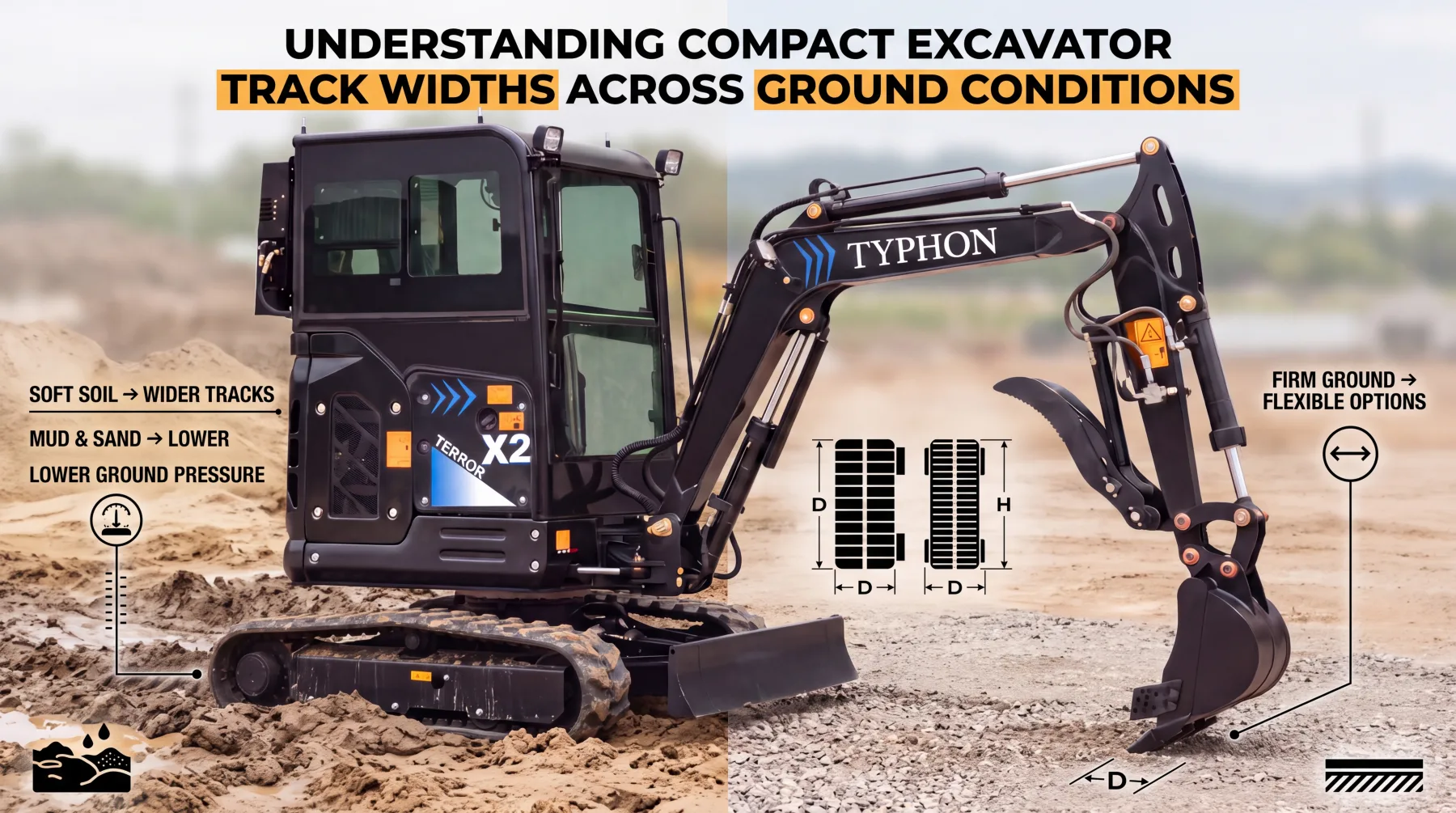
Soft, yielding ground is where wider tracks earn their keep most clearly. On surfaces that cannot bear concentrated weight, a broad footprint spreads the load and keeps the machine from sinking, bogging down, or losing its footing. Several conditions call for that wider stance:
- Soft soil, where a broad footprint prevents the machine from sinking into loose ground.
- Mud, where reduced ground pressure helps the excavator stay mobile rather than becoming stuck.
- Sandy terrain, where a wider base spreads weight across a surface that shifts easily underfoot.
In each of these cases, the wider configuration keeps the machine working productively where a narrower one would fight the ground with every movement.
Firm, level surfaces change the equation considerably. When the ground is solid and even, it supports the machine’s weight readily, so both narrow and wide configurations can perform effectively. On stable footing, the terrain no longer forces the choice toward a wide stance, which frees you to weigh other priorities such as access and transport. This is why understanding ground conditions matters so much: on soft or unstable ground, track width becomes a decisive factor in whether the machine performs at all, while on firm ground it becomes one consideration among several. Reading the terrain accurately lets you match your machine’s footprint to the surface it will work on, protecting both productivity and safety across the range of conditions your projects present.
Selecting the Right Track Width for Your Application
Choosing the right track width comes down to an honest assessment of your work rather than a search for a single “best” configuration. The ideal track width depends on your typical jobsite conditions, machine size, and workload, and these three factors together point toward the setup that will serve you well. A machine matched thoughtfully to these realities performs safely and efficiently, while one chosen without regard for them tends to disappoint in exactly the conditions you face most often.
A few practical questions help clarify the decision and steer you toward the right balance:
- What ground do you work on most, from soft, muddy sites to firm, level surfaces?
- How demanding is your typical lifting and how heavy are the loads you handle?
- How confined are the spaces you access, and how often does transport factor into your work?
- What size of machine suits your projects, since track width should complement its scale and capacity?
Answering these honestly reveals which qualities matter most for your operation. If your work regularly involves heavy lifting on soft or uneven ground, the stability of a wider stance becomes a clear priority worth its trade-offs. If your projects take you into tight, confined sites and demand frequent transport, a narrower configuration may serve you far better despite its reduced margin under load.
The goal throughout is to choose the right balance between stability, mobility, and accessibility, because that balance is what maximizes both safety and overall excavation performance. No configuration excels at everything, so the smartest choice is the one that fits the conditions you encounter day after day. Take the time to weigh your ground, your loads, and your access needs carefully, and you will end up with a machine whose footprint suits your work, keeps your crew safe, and delivers dependable performance across the projects that matter most to you.
Conclusion
Track width plays a decisive role in how safely and effectively an excavator performs. It defines the machine’s base of support, with wider stances improving stability and narrower ones enhancing maneuverability in confined spaces. Wider tracks distribute weight over a larger area, reducing ground pressure and increasing resistance to tipping, which proves invaluable when lifting heavy loads or working on uneven terrain. That stability comes with a trade-off, since wider tracks limit access to tight sites and complicate transport, while narrower tracks fit cramped spaces but offer less confidence under heavy loads. Ground conditions matter too, as soft, muddy, and sandy terrain favor wider tracks while firm surfaces suit both. Ultimately, the right choice depends on your jobsite conditions, machine size, and workload. Balance stability, mobility, and accessibility thoughtfully, and your excavator will deliver dependable, safe performance on every project.