
What Features Increase Skid Steer Resale Value
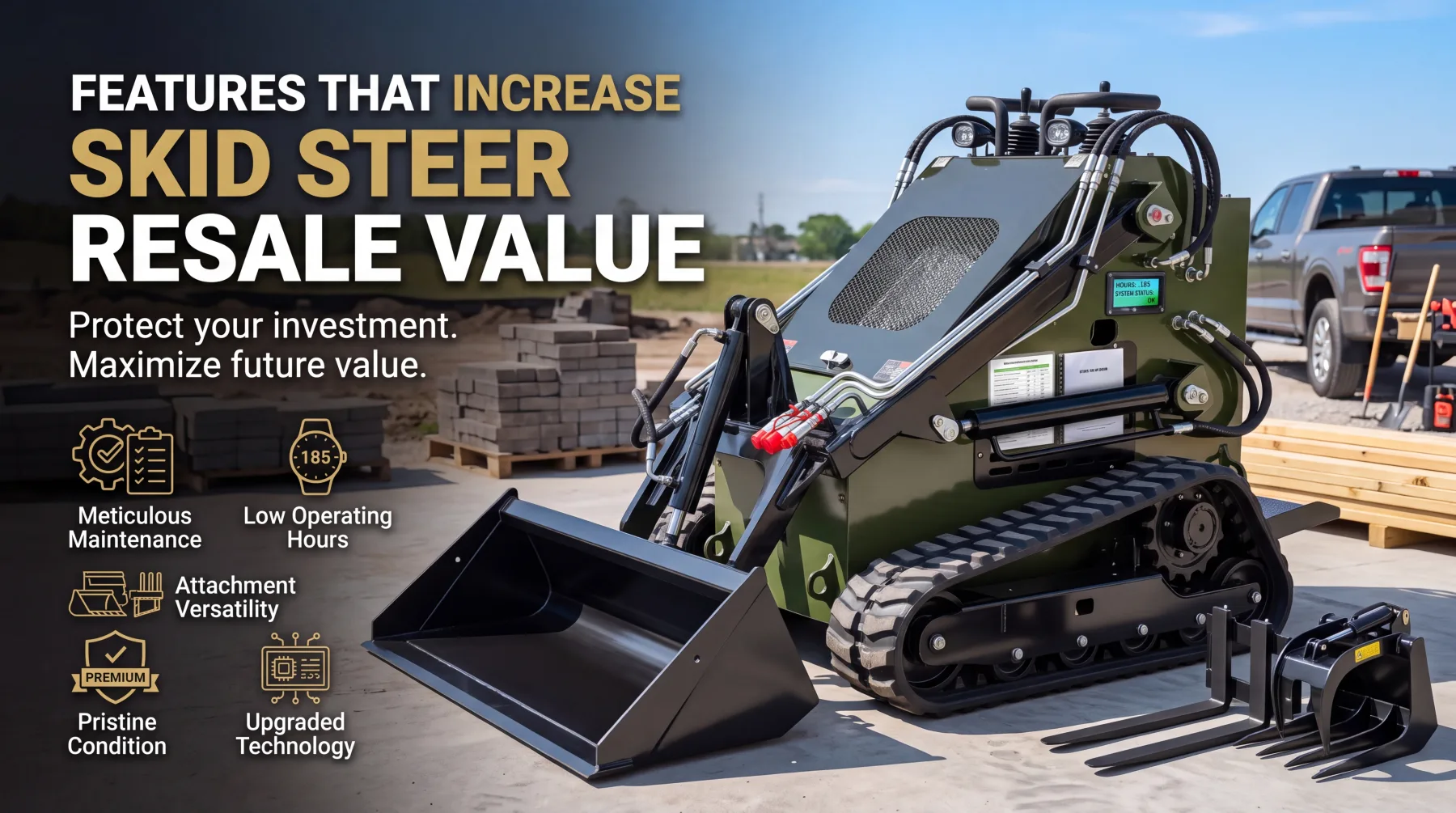
A skid steer is a serious investment, and when the time comes to sell or trade it in, the features and condition of your machine directly shape what it’s worth. Some skid steers command strong resale prices years down the line, while others struggle to attract offers despite still running well. The difference usually comes down to a handful of key factors that buyers scrutinize closely. Understanding what drives resale value helps you protect your investment from the moment you buy, care for the machine wisely, and position it to sell for a premium later. This post walks through five features that increase skid steer resale value, giving you a clear picture of what matters most to future buyers.
Low Operating Hours and Strong Maintenance History
Operating hours are among the first things any buyer checks, and for good reason. Just as mileage tells the story of a used vehicle, hours reveal how hard a skid steer has worked over its life. A machine with fewer hours generally has more useful life left in its engine, hydraulics, and major components, which makes it far more attractive to the next owner. When two comparable skid steers sit side by side, the one with lower hours will almost always draw stronger interest and a higher price, because buyers see less wear and a longer road ahead before major service comes due.
Hours alone don’t tell the whole story, though. A well-documented maintenance history carries nearly as much weight, because it proves the machine has been cared for rather than simply used. Detailed service records give buyers confidence that oil changes, filter replacements, and scheduled inspections happened on time, which signals a machine that’s been respected and maintained properly.
To build resale value through hours and maintenance, focus on a few practical habits:
- Keep detailed service records, logging every oil change, filter replacement, and repair with dates and hour readings.
- Follow the manufacturer’s maintenance schedule, so the machine stays in top condition and the paperwork proves it.
- Address small issues promptly, preventing minor problems from becoming major, value-draining repairs.
A skid steer with modest hours and a complete, organized maintenance file tells a compelling story: this machine has been used sensibly and cared for consistently. That reassurance is exactly what convinces a buyer to pay more, because it lowers their risk and points to reliable performance for years to come.
Reliable Engine and Hydraulic Performance
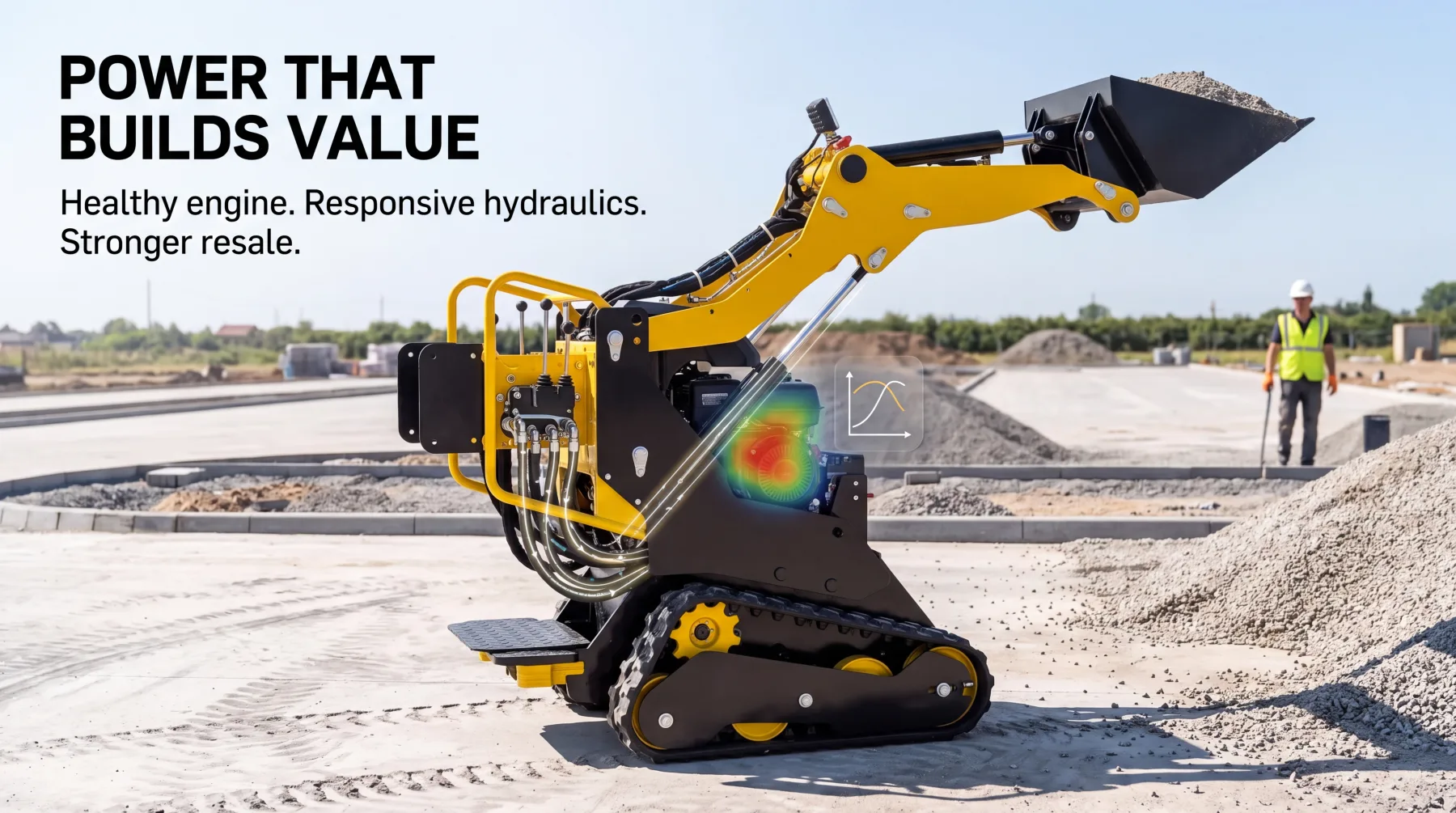
The engine and hydraulic system are the heart of any skid steer, and their condition weighs heavily on resale value. Buyers want a machine that starts dependably, runs smoothly, and delivers full power without hesitation. A healthy engine that idles cleanly, holds steady under load, and shows no signs of excessive smoke or leaks tells a buyer they’re looking at equipment they can put to work immediately. Any hint of engine trouble, on the other hand, raises red flags and drives offers down quickly, because engine repairs are among the most expensive a buyer might face.
The hydraulic system matters just as much, since it powers nearly everything a skid steer does. Responsive lift and tilt functions, smooth attachment operation, and strong, consistent hydraulic flow all signal a system in good health. When a buyer tests the controls and feels a crisp, immediate response with no lag, jerking, or weakness, they gain confidence that the machine will perform reliably on the job. Leaks, sluggish movement, or inconsistent power point to wear or damage that will demand costly attention.
The reason these systems command a premium is simple: buyers pay more for equipment they trust to work without major repairs. A skid steer with a proven, healthy engine and a responsive hydraulic system removes much of the risk from a used purchase, and buyers reward that peace of mind with higher offers. Keeping these core systems in excellent condition through regular servicing, prompt attention to leaks, and proper fluid maintenance protects one of the biggest levers you have over resale value. When the engine and hydraulics perform like new, the whole machine feels dependable, and that reliability translates directly into a stronger sale price.
Versatile Attachment Compatibility
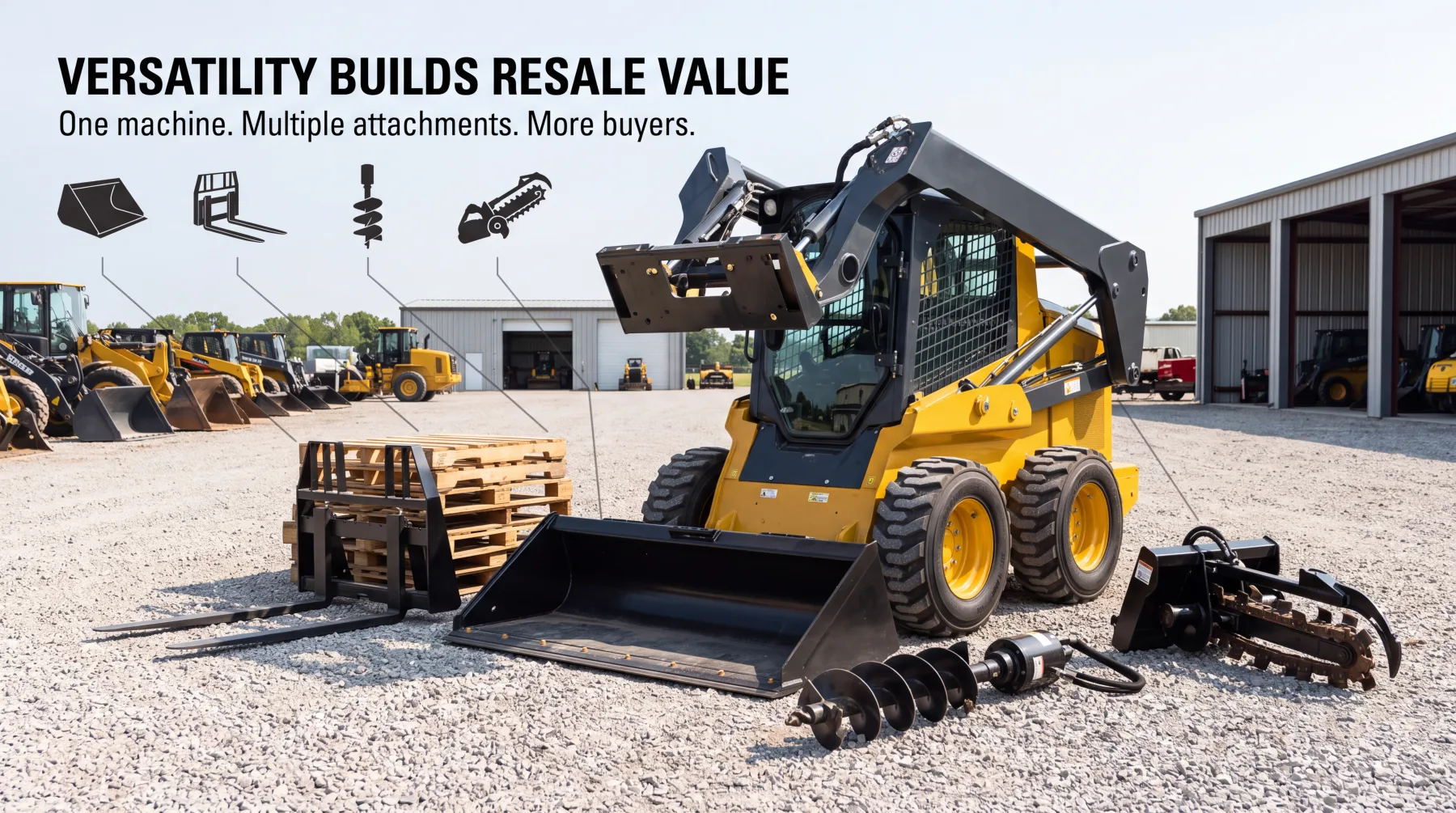
A skid steer’s true value comes from its versatility, and the range of attachments it can run has a direct effect on its resale appeal. A machine that works with a wide variety of commonly used attachments appeals to a much broader pool of buyers, because each buyer can picture it handling their particular mix of jobs. The more uses a skid steer supports, the more people see it as the right tool for their operation, and that wider appeal naturally strengthens demand and price.
Attachment compatibility expands what a machine can do across countless applications, and buyers value equipment that adapts to many tasks:
- Buckets, for digging, loading, grading, and moving loose material.
- Pallet forks, for lifting and transporting palletized loads and supplies.
- Augers, for boring holes for fence posts, footings, and planting.
- Trenchers, for cutting clean trenches for utilities and drainage.
A skid steer that readily accepts this kind of range positions itself as a genuine multi-purpose machine rather than a single-task tool.
Central to this versatility is a standard, widely compatible attachment mounting system, since a universal quick-attach plate lets a machine work with the enormous variety of attachments built to that standard. Buyers who already own attachments want assurance that their existing tools will fit, while those starting fresh want access to the broadest possible selection. Adequate auxiliary hydraulic capacity also matters, because many popular attachments depend on hydraulic power to function. A skid steer that combines a universal mounting system with strong hydraulic support can take on nearly any job a buyer imagines, and that flexibility makes it stand out in a crowded resale market. When your machine appeals to buyers across landscaping, construction, farming, and property maintenance alike, you gain more interest and stronger offers.
Durable Tires, Tracks, and Undercarriage
The running gear that carries a skid steer, its tires, tracks, and undercarriage, plays a surprisingly large role in how buyers perceive value. These components are expensive to replace, so their condition directly affects the immediate costs a new owner will face. A buyer inspecting a used machine looks closely at this running gear, because worn tires or a tired undercarriage means writing another sizable check soon after purchase. Well-maintained running gear, by contrast, signals a machine ready to work without added expense.
On wheeled skid steers, tire condition is easy to assess and quick to influence an offer. Tires with plenty of tread remaining and no significant damage tell a buyer the machine can go straight to work, while bald or damaged tires invite lower bids to cover replacement.
On tracked machines, the undercarriage carries even greater weight in the valuation:
- Track condition, with adequate remaining life and no major cracking, missing lugs, or damage.
- Undercarriage components, including rollers, idlers, and sprockets that show reasonable wear rather than heavy deterioration.
- Proper adjustment and alignment, indicating the running gear has been maintained and not neglected.
Because undercarriage repairs rank among the most costly a tracked machine can require, good condition here protects a substantial portion of the resale value.
The principle is straightforward: buyers factor the cost of upcoming running-gear replacement directly into what they’re willing to pay. Every dollar of tire, track, or undercarriage wear is a dollar they’ll subtract from their offer. Keeping this running gear in strong condition through proper operation, regular inspection, and timely maintenance means fewer immediate costs for the next owner, and that translates into a higher, more confident offer. Well-maintained running gear reassures buyers that the machine has been operated with care and stands ready for many hours of dependable work.
Modern Features and Operator Comfort
Today’s buyers expect more than raw capability from a used skid steer; they look for practical features and a comfortable working environment that make the machine productive and pleasant to operate. Modern conveniences and operator-friendly design can set your machine apart in a competitive resale market, drawing interest from buyers who value efficiency and comfort during long working days. Equipment that offers these features often stands out against comparable machines that feel dated or bare-bones.
Several features consistently increase a skid steer’s desirability among buyers:
- Auxiliary hydraulics, which power a wide range of attachments and expand what the machine can accomplish.
- Quick-attach systems, allowing operators to change attachments fast and work more efficiently.
- Enclosed cabs, offering protection from weather, dust, and noise for year-round comfort.
- Improved visibility, giving operators clear sightlines that boost both safety and productivity.
- Comfortable, ergonomic controls, reducing fatigue and making the machine easier to operate for extended periods.
Buyers recognize these features as real advantages, and a machine that includes them naturally commands more attention and stronger offers.
The appeal of these features comes down to how they improve daily work. An enclosed cab with good climate protection turns a punishing job in harsh weather into a manageable one, while intuitive controls and clear visibility help operators work faster, safer, and with less fatigue. Quick-attach systems and reliable auxiliary hydraulics make the machine more versatile and efficient, which matters enormously to buyers weighing productivity. A used skid steer that combines practical technology with operator-friendly design signals a thoughtful, capable machine rather than a stripped-down workhorse. That impression helps it stand out, attract more interested buyers, and ultimately sell for a stronger price in the resale market.
Conclusion
Protecting your skid steer‘s resale value starts long before you decide to sell. Low operating hours backed by a thorough maintenance history, a healthy engine and responsive hydraulics, broad attachment compatibility, well-maintained tires, tracks, and undercarriage, and desirable modern features all work together to make your machine stand out to future buyers. Each of these factors lowers the buyer’s risk and raises their confidence, and that confidence translates directly into stronger offers. Care for your machine consistently, keep detailed records, and maintain its core systems and running gear, and you’ll be rewarded with a higher resale price when the time comes. A well-cared-for skid steer holds its value, and that makes your original investment work harder for you in the long run.