
Modern Wheel Loader Technologies That Improve Productivity
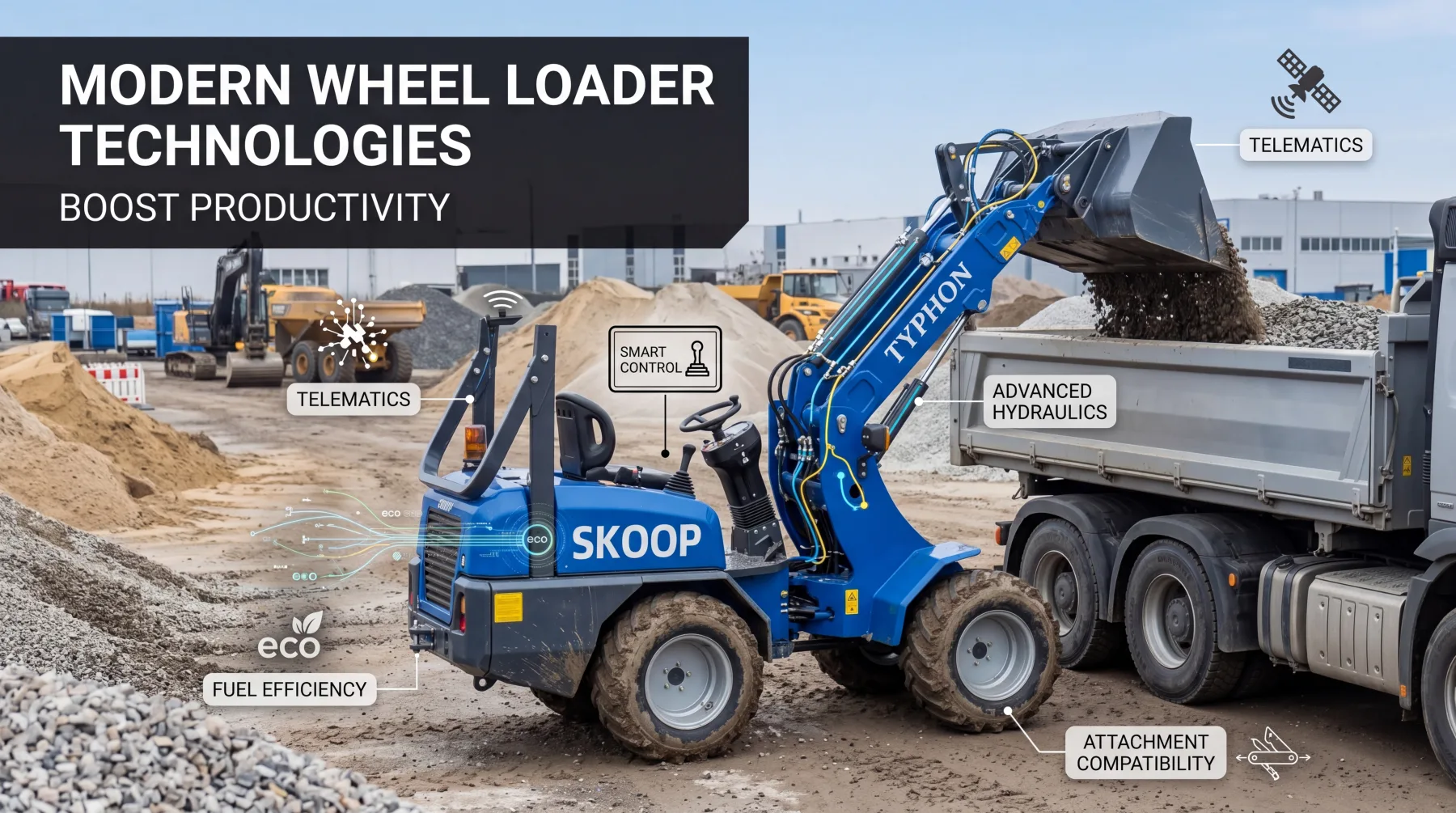
The wheel loader has come a long way from a simple machine that scoops and dumps. Today’s models are packed with technology that helps them work faster, burn less fuel, and give operators far more control over every task. These advances aren’t just impressive features on a spec sheet; they translate directly into more work completed, lower operating costs, and a smoother experience behind the controls. Whether you’re loading trucks, feeding a crusher, or handling material across a busy site, modern wheel loader technology helps you do it better. This post explores five key innovations driving productivity: advanced hydraulic systems, intelligent operator assistance, fuel-efficient engines, telematics, and attachment compatibility.
Advanced Hydraulic Systems
The hydraulic system is the muscle behind everything a wheel loader does, and modern advances in this area have transformed how quickly and smoothly the machine works. Improved hydraulic efficiency means the machine delivers power to the lift arms and bucket exactly when it’s needed, with less waste and less lag. That efficiency shows up directly in faster cycle times, as the loader raises, tilts, and lowers loads more quickly and with greater control. For an operation measured by how many trucks you fill or how much material you move in a shift, that added speed adds up fast.
Responsive controls are just as important as raw hydraulic power. Newer systems translate the operator’s inputs into precise, immediate machine movement, so lifting and loading feel smooth rather than jerky. This responsiveness lets operators place loads accurately and work confidently at a steady pace, without fighting the machine or waiting for functions to catch up.
Modern hydraulic technology improves productivity in several concrete ways:
- Faster cycle times, as efficient hydraulics complete lift, tilt, and dump motions more quickly.
- Smoother control, letting operators handle loads precisely and place material accurately.
- Better power distribution, directing hydraulic energy where it’s needed for demanding lifts.
Together, these improvements help a wheel loader complete lifting, loading, and material-handling tasks faster and with less effort. When the hydraulics respond instantly and work efficiently, operators spend less time per cycle and more time being productive. The result is a machine that keeps pace with demanding workloads while giving the person in the seat the confident, precise control that quality work depends on.
Intelligent Operator Assistance
Modern wheel loaders increasingly share the workload with the operator through intelligent assistance technologies. These systems take on repetitive tasks, monitor conditions, and guide the operator toward better results, reducing the manual effort required to run the machine well. The goal isn’t to replace operator skill but to support it, helping both seasoned and newer operators work with greater precision and less fatigue across a long shift.
Automated functions are among the most valuable of these features. Systems that automatically return the bucket to a preset dig position, or that limit lift height to a programmed point, spare the operator from repeating the same manual adjustments hundreds of times a day. That consistency speeds up cycles and reduces the small errors that creep in when fatigue sets in.
Several operator-assistance technologies stand out for the productivity they deliver:
- Automated functions, such as return-to-dig and programmable lift limits that streamline repetitive motions.
- Load monitoring, which weighs material in the bucket so operators load trucks accurately and avoid overloading or underloading.
- Operator-assistance systems, including guidance and stability aids that improve control and safety.
Load monitoring deserves particular attention because it directly affects efficiency and cost. Knowing the exact weight in the bucket lets operators fill trucks to their proper capacity in fewer passes, avoiding the wasted trips of underloading and the compliance risks of overloading. This precision saves time on every load and protects both the machine and the material being handled.
By reducing manual effort and improving accuracy, intelligent assistance helps operators perform at a higher level throughout the day. The technology handles the routine and the repetitive, freeing the operator to focus on the work that genuinely requires human judgment. The outcome is faster, more precise operation that stays consistent from the first load to the last.
Fuel-Efficient Engine Technology
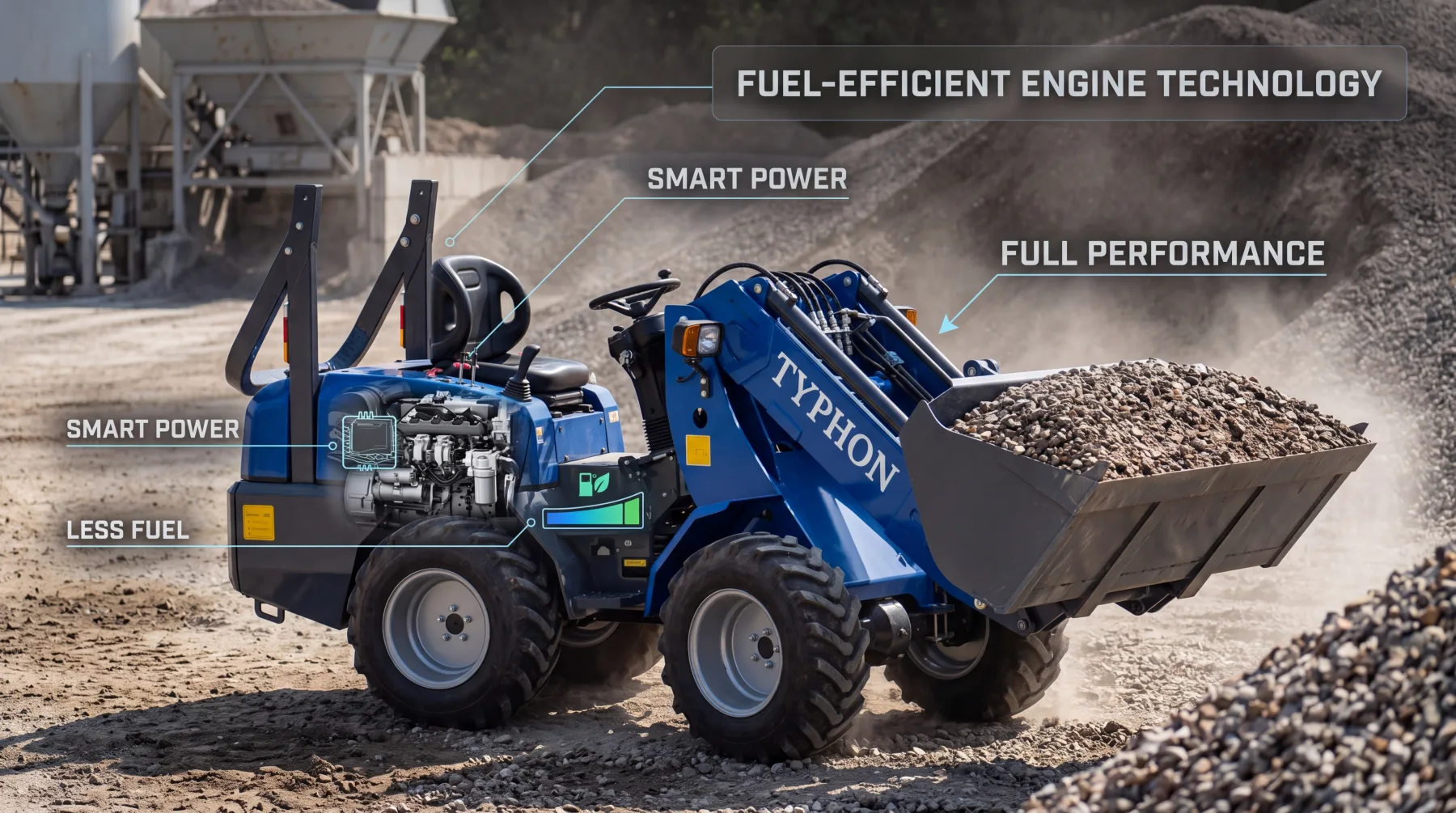
Fuel is one of the largest ongoing costs of running a wheel loader, so modern engine technology that trims consumption has a direct impact on your bottom line. Today’s engines are engineered to deliver the same demanding power output while using less fuel, striking a balance that older machines simply couldn’t achieve. This efficiency lets operations lower their operating costs without sacrificing the strength needed for heavy lifting and hard digging.
Much of this improvement comes from intelligent power management. Rather than running the engine at full output regardless of the task, modern systems match power delivery to the actual demands of the moment. When the machine is idling or performing light work, the system eases back on fuel use; when a heavy load calls for full power, the engine delivers it. This smart matching of power to need eliminates the waste that once came from running an engine harder than the job required.
Modern engines reduce fuel consumption through several complementary approaches:
- Efficient engine design, extracting more work from every unit of fuel burned.
- Intelligent power management, delivering power in proportion to the task at hand.
- Fuel-saving systems, such as automatic idle reduction and eco operating modes that cut consumption during lighter work.
The practical benefit is a machine that keeps costs down while staying ready for the toughest jobs. Automatic idle reduction, for example, lowers engine speed when the loader isn’t actively working, quietly saving fuel throughout the day without any action from the operator. These savings accumulate steadily over weeks and months of operation.
Importantly, this efficiency doesn’t come at the expense of capability. Modern engines maintain the power and responsiveness demanding work requires, so operators never have to choose between saving fuel and getting the job done. You gain lower running costs and dependable performance in the same machine.
Telematics and Machine Monitoring
Telematics has given fleet managers and operators a clear window into how their wheel loaders are actually performing. By collecting and transmitting data from the machine, telematics systems turn everyday operation into useful information that supports smarter decisions. Instead of guessing about machine health, usage, or efficiency, managers can rely on real data drawn straight from the equipment in the field.
The range of information telematics captures is extensive, and each type helps in a specific way. Managers can see how the machine is being used, how hard it’s working, and when it needs attention, all without physically inspecting each unit. This visibility is especially valuable for operations running multiple machines across different jobsites, where keeping track of everything manually would be nearly impossible.
Telematics systems typically track and report on:
- Machine performance, showing how efficiently the loader is operating.
- Operating hours, helping managers monitor utilization and plan workloads.
- Fuel use, revealing consumption patterns and opportunities to save.
- Maintenance data, flagging service needs and potential issues before they cause failures.
The maintenance benefit alone can be significant. When telematics alerts a manager to a developing issue or an approaching service interval, that maintenance can be scheduled proactively rather than reacting to a costly breakdown. Preventing unplanned downtime keeps machines working and projects on track, protecting both productivity and the equipment itself.
Beyond maintenance, the data helps managers make better operational decisions across the board. Understanding fuel use and operating hours reveals which machines are working hardest, where efficiency can improve, and how to allocate equipment across jobs. For operators, the same information supports better daily habits. Telematics transforms a wheel loader from a machine you simply run into an asset you actively manage, and that visibility is a powerful driver of long-term productivity.
Attachment and Work Tool Compatibility
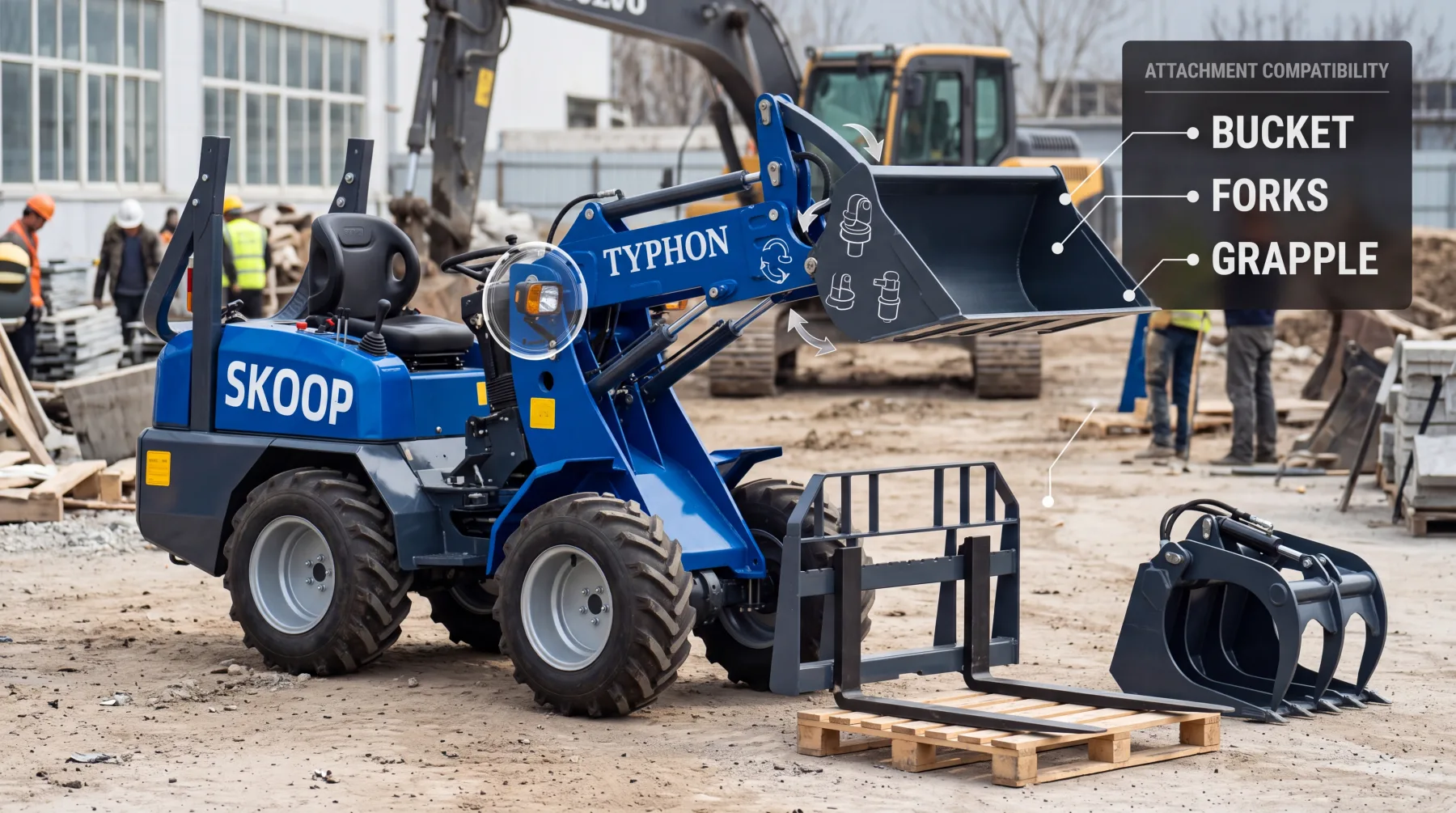
A wheel loader’s value grows enormously when it can do more than one job, and modern attachment technology makes that versatility practical. Quick couplers, which let an operator switch attachments in moments without leaving the cab or wrestling with pins by hand, have turned the wheel loader into a flexible tool carrier. Rather than being limited to a single bucket, one machine can take on a wide range of tasks by swapping to the right work tool for each job.
This flexibility directly increases machine utilization, which is one of the most important measures of equipment value. A loader that sits idle because it lacks the right tool earns nothing, while a loader that quickly adapts to whatever a jobsite demands stays productive all day. Quick couplers make those transitions fast and simple, so operators change tools in seconds and keep working rather than losing time between tasks.
Compatible attachments expand what a single wheel loader can accomplish across many applications:
- General-purpose and specialty buckets, for digging, loading, and handling different materials.
- Pallet forks, for lifting and moving palletized loads and supplies.
- Grapples, for handling logs, brush, scrap, and awkward debris.
- Material-handling arms and other tools, for lifting and placing loads with precision.
With a quick coupler and a set of compatible work tools, one wheel loader can move material in the morning, handle pallets midday, and clear debris in the afternoon, all without needing separate machines for each task. That capability is especially valuable for operations that face varied work across different jobsites, since a single versatile loader replaces the cost and complexity of a larger, more specialized fleet.
By allowing one machine to handle more tasks, attachment compatibility maximizes the return on your equipment investment. The wheel loader spends more of its time working and less of it idle, and every hour it operates delivers more value across the range of jobs it can perform.
Conclusion
Modern wheel loaders bring together a powerful set of technologies that work in concert to boost productivity across every job. Advanced hydraulic systems speed up lifting and loading with efficient, responsive power, while intelligent operator assistance reduces manual effort and sharpens precision. Fuel-efficient engines lower operating costs without giving up the strength demanding work requires, and telematics turns everyday operation into data that guides smarter maintenance and management decisions. Add versatile attachment compatibility, and a single machine handles more tasks and stays productive across varied sites. Together, these innovations help you complete more work, control costs, and operate with confidence. Choosing a wheel loader equipped with these technologies is a dependable investment in the efficiency and profitability of your operation for years to come.