
How Travel Pump Pressure Affects Skid Steer Driving Performance
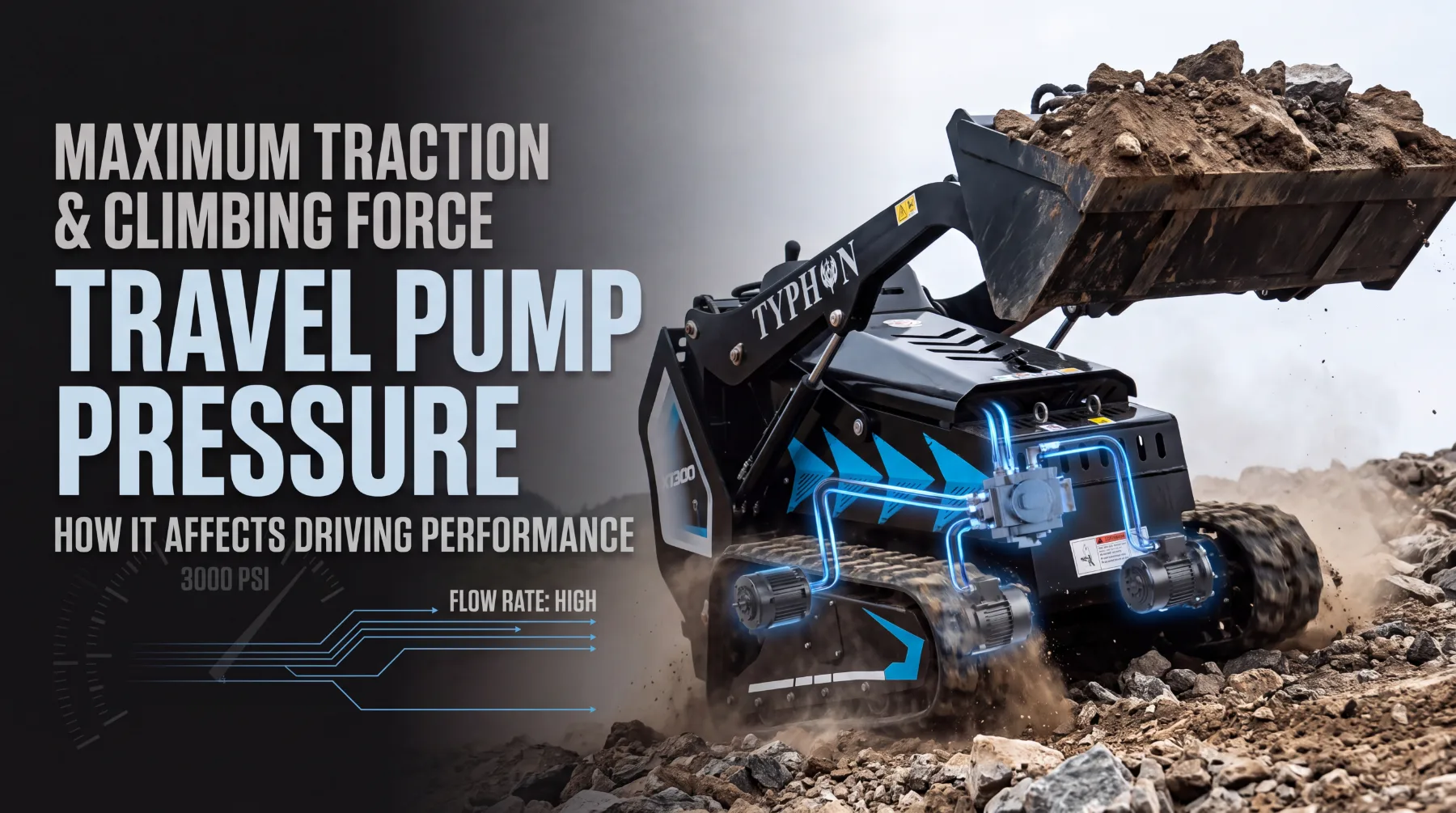
Operators often judge a skid steer by its engine size or lift capacity, yet the travel system quietly determines how well the machine moves across a site. At the heart of that system sits the travel pump, and the pressure it generates shapes how the machine drives, climbs, and carries loads. When travel pump pressure is matched correctly to the machine, the skid steer pushes through tough ground, holds traction on slopes, and moves heavy attachments with steady confidence. When it falls short, the machine struggles exactly when the work turns demanding. This guide explains how travel pump pressure affects driving performance, so you can understand what really keeps a skid steer moving dependably.
Travel Pump Pressure Influences Driving Force
Travel pump pressure is a primary driver of how much force a skid steer can put down at its tracks or wheels. The travel pump sends hydraulic fluid under pressure to the travel motors, and those motors convert that pressure into the torque that turns the tracks or wheels. Higher hydraulic pressure allows the motors to generate greater torque, which translates directly into more driving force. That force is what lets the machine push through soft, muddy, or uneven terrain and maintain traction even when it is carrying a load.
Think of pressure as the muscle behind every movement the machine makes across the ground. When the tracks meet resistance, whether from loose soil, thick mud, or a pile of material the machine is driving into, the travel motors need enough torque to keep turning without stalling. Adequate travel pump pressure supplies that torque, letting the skid steer maintain momentum through conditions that would bog down a weaker system.
The connection between pressure and driving force shows up in several everyday situations:
- Pushing through difficult terrain: higher pressure helps the machine drive through mud, sand, and soft ground without losing momentum.
- Maintaining traction under load: the travel motors keep enough torque to hold grip even when the machine carries weight.
- Driving into material piles: strong driving force lets the machine bite into a pile and fill the bucket effectively.
A skid steer with travel pump pressure matched to its design delivers the force it needs to work confidently across the ground. When pressure is adequate, the machine moves with authority instead of straining, and that steady driving force is what keeps productive work moving through the toughest conditions on site.
Pressure Affects Performance on Slopes
Few tasks test a skid steer’s travel system as much as climbing a slope, and travel pump pressure plays a decisive role in how the machine handles that challenge. When a skid steer drives up a ramp, an incline, or uneven ground, gravity adds resistance that the travel motors must overcome. Adequate travel pressure supplies the torque needed to keep the machine moving steadily uphill, holding its pace against that added load. When pressure falls short, the machine struggles, slows, or loses momentum partway up the grade.
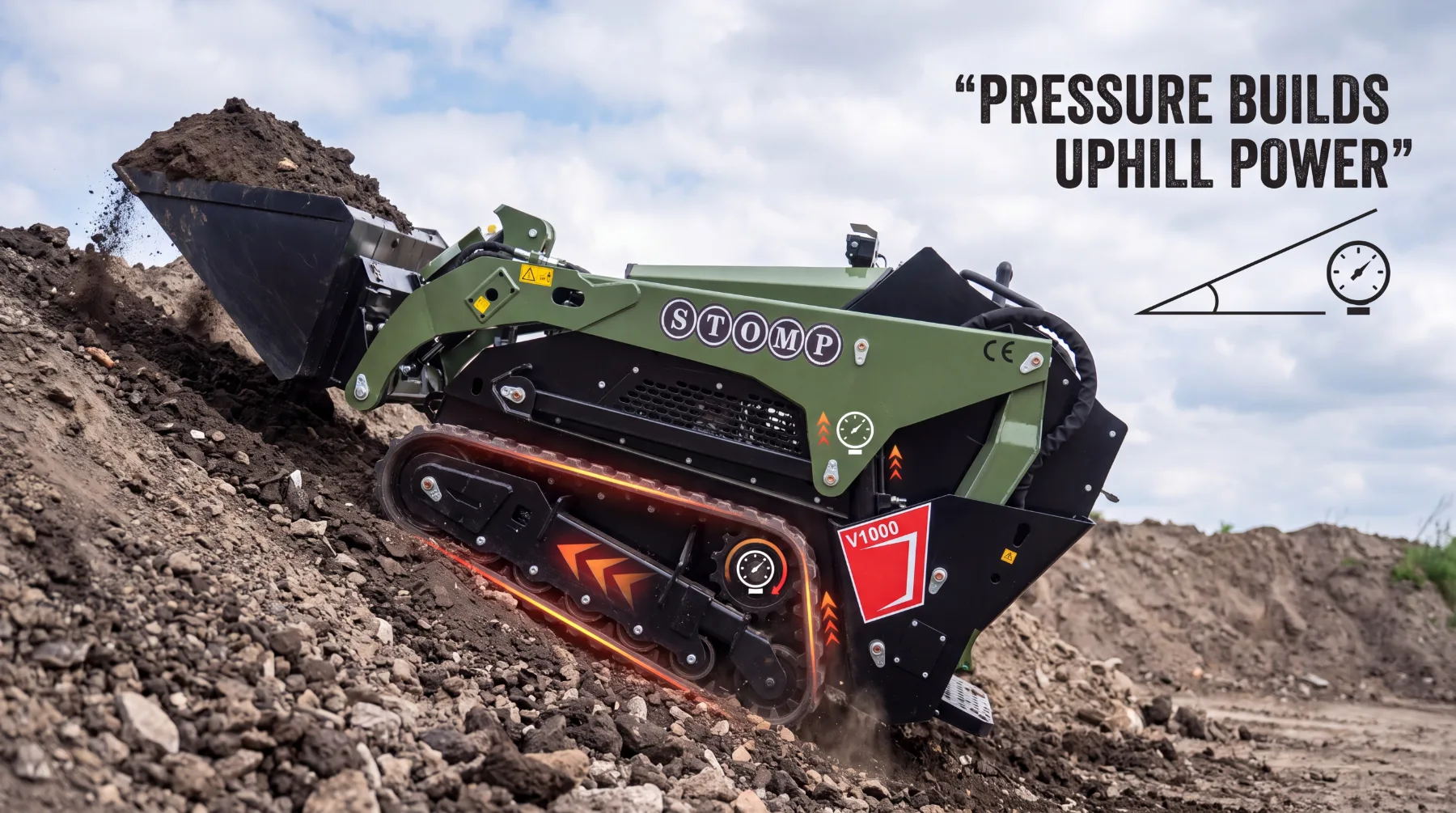
The steeper the slope, the more the travel system has to work. Climbing demands sustained driving force, not a brief burst, because the resistance stays constant the entire way up. A travel system with sufficient pressure meets that demand smoothly, letting the operator drive up loading ramps and inclines with confidence. A system that cannot generate enough pressure leaves the machine underpowered on grades, which slows the work and can leave the operator fighting the machine to reach the top.
This matters most in common on-site situations where slopes are unavoidable:
- Loading ramps: driving onto a trailer or into a truck bed often means climbing a steep, short incline under load.
- Site inclines: working across graded ground, embankments, or sloped terrain calls for steady uphill driving force.
- Uneven surfaces: rough or pitched ground adds resistance that the travel system must overcome to keep moving.
Insufficient travel pressure makes these tasks harder and less predictable, since the machine may hesitate or stall where steady progress is expected. A skid steer with travel pressure matched to its intended work climbs dependably and holds its footing, giving operators the driving force they need to tackle slopes and ramps without losing control or momentum.
Hydraulic Pressure Supports Heavy Load Movement
Carrying a heavy load changes how a skid steer moves, and travel pump pressure is what keeps that movement steady. When the machine hauls a loaded bucket, a heavy attachment, or a full set of pallet forks, the travel system faces greater resistance than it does when running empty. The added weight increases the effort required to start moving, keep moving, and hold a consistent pace. Proper travel pump pressure supplies the torque needed to overcome that resistance, so the machine maintains reliable movement rather than laboring under the load.
The relationship is straightforward. More weight means more resistance, and more resistance demands more driving force to keep the machine traveling at a useful speed. A travel system with adequate pressure absorbs that demand and keeps the skid steer moving smoothly, even when the load is near the machine’s capacity. Without enough pressure, the machine can lose travel performance under load, slowing noticeably and making each cycle take longer than it should.
This becomes especially important during repetitive load-and-carry work, where the machine spends much of its day moving material from one point to another. Every trip involves accelerating with a load, traveling across the site, and often driving over less-than-ideal ground while carrying that weight. A skid steer with travel pressure matched to these demands handles the work without a meaningful loss of pace, keeping productivity high across a full shift.
When you consider how a skid steer will perform under load, the travel system deserves as much attention as the lift system. A machine that lifts well but loses travel performance when carrying weight cannot deliver its full value. Proper travel pump pressure ensures the machine moves heavy loads consistently, letting operators keep material flowing without the delays that come from an underpowered travel system.
Pressure Must Match the Travel System
It is tempting to think that simply raising travel pump pressure will make a skid steer faster or more capable, but the reality is more nuanced. Travel pump pressure does not work in isolation. It functions as part of a complete travel system that includes hydraulic flow, motor displacement, and the machine’s overall design. Each of these elements depends on the others, and true driving performance comes from how well they work together, not from any single figure pushed higher on its own.
The distinction between pressure and flow helps explain why. Pressure determines the force the travel motors can generate, while hydraulic flow determines how fast they turn, which sets travel speed. Motor displacement affects how that pressure and flow translate into torque and speed at the tracks or wheels. Raising pressure alone, without the flow and motor design to support it, will not automatically produce a faster or stronger machine. In fact, pushing pressure beyond what the system is built to handle can strain components rather than improve performance.
This is why a balanced travel system matters so much. Consider how the pieces fit together:
- Pressure: sets the driving force the travel motors can produce for climbing, pushing, and carrying loads.
- Flow: determines travel speed by controlling how quickly the motors turn.
- Motor displacement and design: shape how pressure and flow become usable torque and speed at the ground.
A well-designed travel system matches these elements so the machine delivers both the force and the speed its work requires. When you evaluate a skid steer’s driving capability, look at how the travel system is engineered as a whole rather than focusing on pressure by itself. A properly matched system delivers dependable performance, while an unbalanced one leaves capability untapped no matter how high a single specification reads.
Proper Pressure Improves Consistency and Control
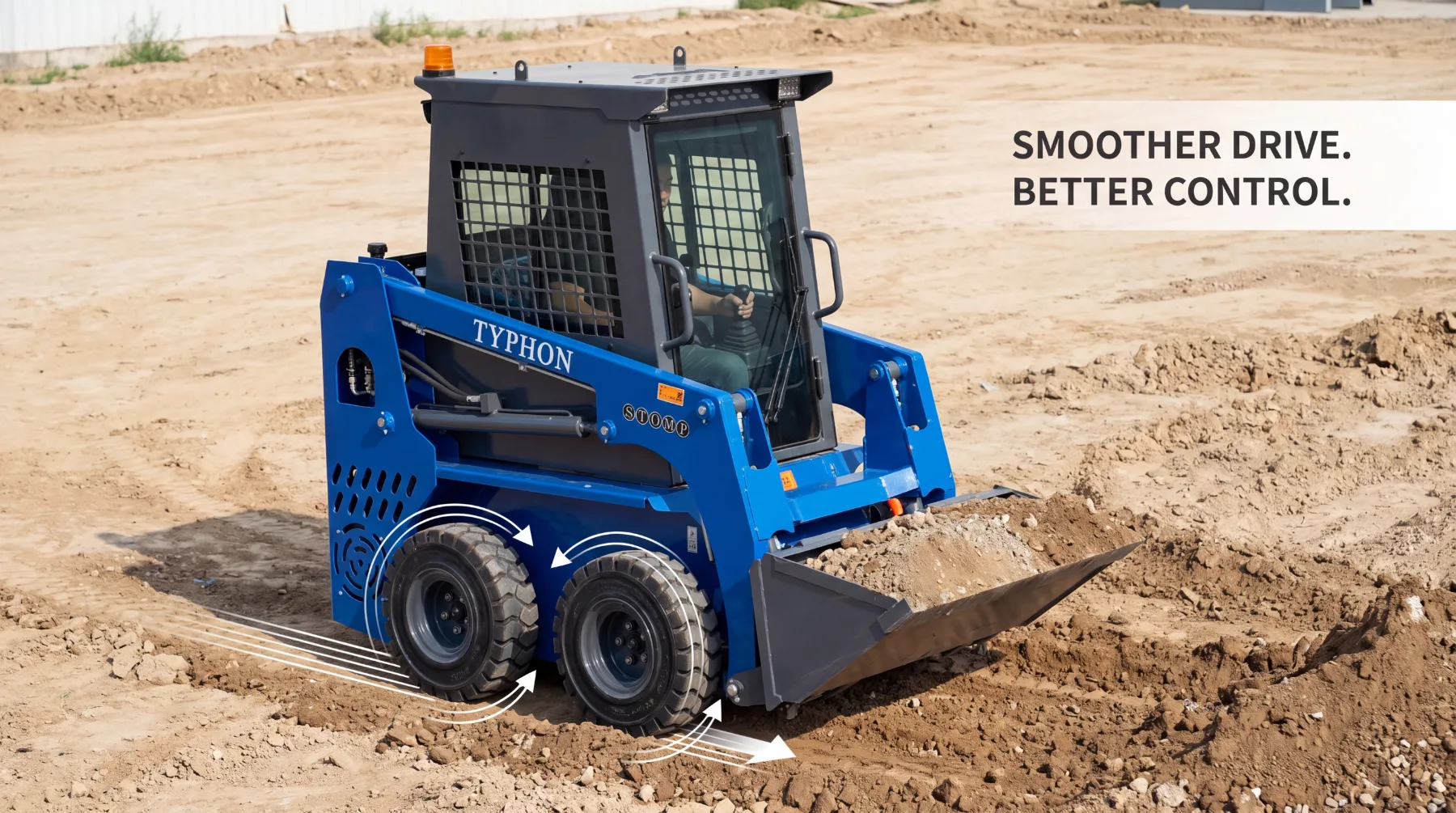
The real value of a well-matched travel system shows up in how predictably the machine behaves. When travel pump pressure is correctly matched to the flow, the motors, and the machine’s design, the skid steer delivers consistent acceleration, steady traction, and smooth movement across changing ground conditions. That consistency is what gives operators confidence, because the machine responds the same way whether it is on firm ground, soft soil, or a slope. Predictable behavior is the foundation of good control.
Control matters most during demanding jobs, where an operator has to manage the machine precisely while handling a load or working in a tight space. A travel system that delivers smooth, predictable driving force lets the operator feather movements, apply power gradually, and position the machine accurately. When pressure is properly matched, acceleration feels controlled rather than jerky, and traction holds steady rather than slipping unpredictably. This lets operators work with precision instead of constantly compensating for a machine that behaves inconsistently.
A correctly matched travel system supports the operator in several practical ways:
- Predictable acceleration: the machine responds smoothly to control inputs, making movements easier to judge.
- Steady traction: consistent driving force helps the tracks or wheels hold grip across varied surfaces.
- Smooth movement: the machine transitions between ground conditions without sudden changes in behavior.
This consistency also reduces operator fatigue over a long shift, since a predictable machine takes less effort to control. When the travel system behaves the same way from one task to the next, the operator can focus on the work rather than on managing the machine’s quirks. A skid steer with properly matched travel pressure delivers the smooth, dependable control that keeps demanding jobs running safely and efficiently, giving operators the confidence that the machine will do exactly what they expect every time they move it.
Conclusion
Travel pump pressure shapes far more of a skid steer’s performance than many operators realize. It supplies the driving force that pushes the machine through difficult terrain, powers it up ramps and slopes, and keeps it moving steadily under heavy loads. Yet pressure never works alone. It must be matched with hydraulic flow, motor displacement, and the machine’s overall design to deliver real capability, since simply raising pressure will not make a skid steer faster or stronger. A well-matched travel system rewards operators with consistent acceleration, dependable traction, and smooth control across changing ground. When you judge a skid steer’s driving performance, look at how the whole travel system works together. That balance is what delivers the reliable, confident movement you can count on shift after shift.
Frequently Asked Questions
- What does travel pump pressure actually do on a skid steer?
Travel pump pressure is what gives the machine its driving force. The travel pump sends hydraulic fluid under pressure to the travel motors, which convert that pressure into torque at the tracks or wheels. Higher pressure allows the motors to generate greater torque, which helps the skid steer push through difficult terrain, hold traction under load, and drive into material piles. In simple terms, pressure is the muscle behind every movement the machine makes across the ground. When pressure is matched correctly to the machine, the skid steer moves with authority instead of straining under resistance. - Why does my skid steer struggle to climb slopes or ramps?
Climbing a slope adds resistance because the travel motors must overcome gravity as well as the machine’s own weight and any load it carries. This demands sustained driving force, which depends on adequate travel pump pressure. If the travel system cannot generate enough pressure, the machine may slow, hesitate, or lose momentum partway up the grade. The steeper the slope, the more the system has to work. A skid steer with travel pressure matched to its intended work climbs ramps and inclines steadily, while an underpowered system leaves the machine struggling on grades where steady progress is expected. - How does travel pressure affect the machine when carrying heavy loads?
Carrying a heavy bucket, attachment, or full forks increases the resistance the travel system must overcome to start moving, keep moving, and hold a steady pace. Proper travel pump pressure supplies the torque needed to absorb that added demand, so the machine maintains consistent movement rather than laboring under the weight. Without enough pressure, the skid steer can lose travel performance under load, slowing noticeably and stretching out each cycle. This matters most during repetitive load-and-carry work, where a well-matched travel system keeps material moving at a useful pace across a full shift. - Will increasing travel pump pressure make my skid steer faster?
Not on its own. Pressure determines driving force, but travel speed depends on hydraulic flow, which controls how fast the motors turn. Motor displacement and the machine’s overall design also shape how pressure and flow become usable torque and speed at the ground. Simply raising pressure without the flow and motor design to support it will not make the machine faster, and pushing pressure beyond what the system is built to handle can strain components. True driving performance comes from a balanced travel system where pressure, flow, and motor design work together, not from a single specification pushed higher. - How does properly matched travel pressure improve control?
When travel pump pressure is correctly matched to the flow, the motors, and the machine’s design, the skid steer delivers consistent acceleration, steady traction, and smooth movement across changing ground. That predictability lets operators feather movements, apply power gradually, and position the machine accurately, which is essential during demanding or precise work. Acceleration feels controlled rather than jerky, and traction holds steady instead of slipping unpredictably. This consistency also reduces operator fatigue, since a predictable machine takes less effort to manage. The result is smooth, dependable control that keeps demanding jobs running safely and efficiently.