
Rocky soil is one of the most damaging environments for heavy equipment. Sharp edges, buried boulders, and constantly shifting ground conditions place continuous stress on every part of a machine. Buckets, cutting edges, pins, hydraulic systems, tires, and undercarriages all experience accelerated wear when operating on abrasive terrain. Without the right approach, even well built machines can suffer frequent breakdowns, higher maintenance costs, and reduced productivity over time.
However, most rock related damage is not inevitable. It is usually the result of predictable wear patterns combined with aggressive operation and inconsistent maintenance. When operators understand how rock interacts with equipment and adjust their methods accordingly, machines can perform reliably for much longer periods. Small changes in how a machine is equipped, operated, and maintained can significantly reduce downtime and extend service life.
Protecting equipment on rocky sites requires a combination of reinforced components, careful operating techniques, and disciplined maintenance routines. Each factor plays a role in reducing impact forces and preventing unnecessary strain on critical systems. When these elements work together, machines remain more stable, experience fewer failures, and deliver more consistent performance even under harsh conditions.
Strengthen Parts That Wear Out Fast
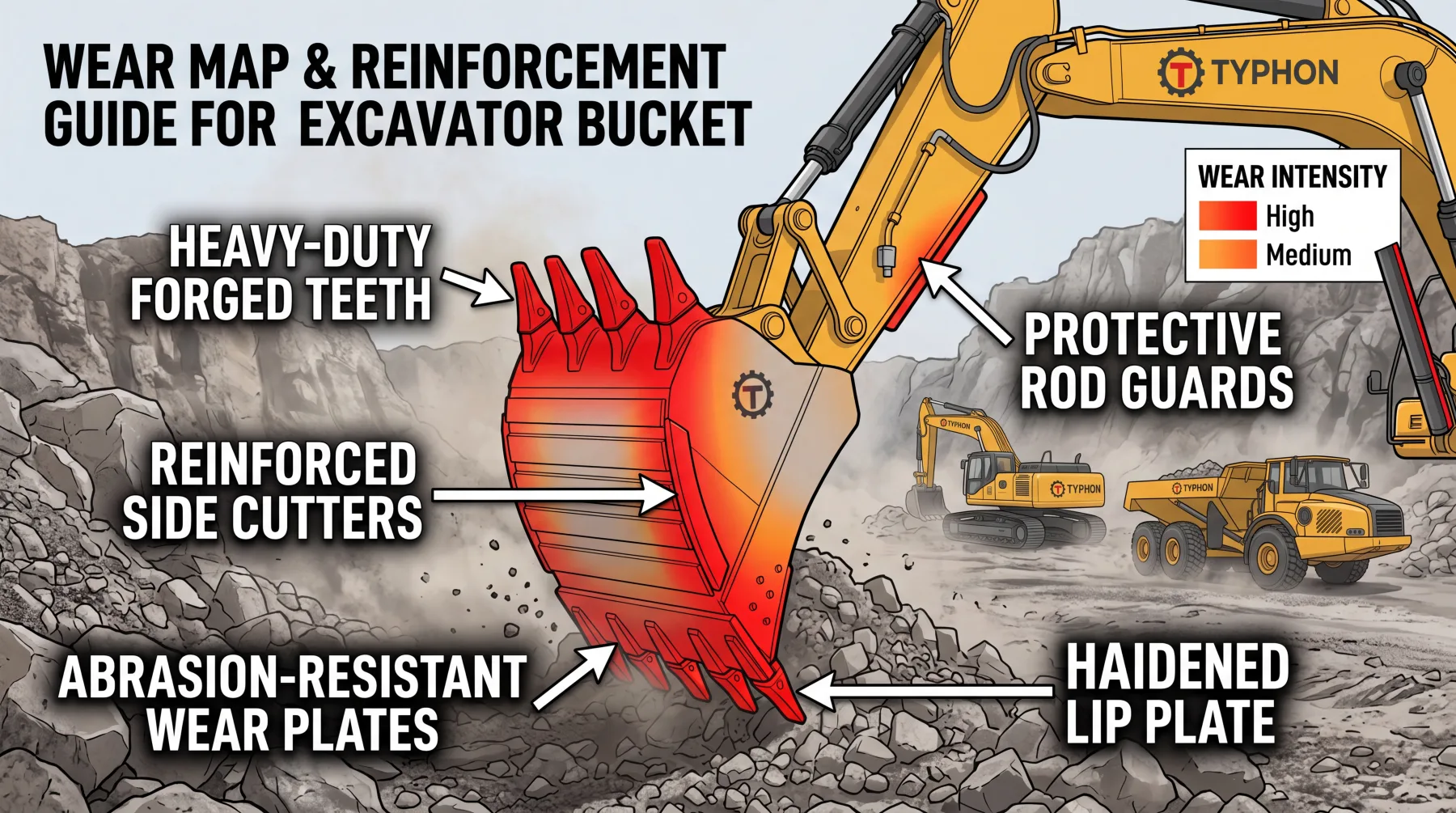
Certain components are naturally more exposed to damage when working on rocky soil. Identifying these high wear areas early allows operators and maintenance teams to reinforce them before failures occur. Rock does not wear machines evenly, it concentrates stress on specific contact points that take repeated impact and abrasion.
The most vulnerable areas include bucket edges, teeth, and side cutters. These parts are constantly in contact with rock and are responsible for breaking and moving material. Over time, they wear down quickly, reducing digging efficiency and increasing strain on the machine. On tracked equipment, undercarriage components such as track pads, rollers, and idlers experience continuous abrasion from sharp and uneven surfaces, leading to faster degradation compared to softer ground conditions.
Hydraulic systems are also at risk. Exposed hoses and cylinder rods can be damaged by flying debris or direct impact with rock during operation. Once these components are compromised, repairs can be costly and may lead to extended downtime.
To reduce this wear, reinforcing critical components is essential. Common protection measures include:
- Installing heavy duty bucket teeth and wear resistant cutting edges
- Using bolt on wear plates in high impact zones
- Selecting abrasion resistant steel for bucket construction
- Adding rock guards and hose protection sleeves for hydraulic lines
- Reinforcing cylinder rods with protective shielding
These upgrades act as sacrificial layers, absorbing damage before it reaches the core structure of the machine. While they may increase upfront costs slightly, they significantly reduce long term repair expenses and extend the usable life of key components.
Dig and Push Smarter to Avoid Banging Up Your Machine
Operating technique has a major impact on machine lifespan in rocky environments. Even a well equipped machine can suffer premature wear if it is used aggressively or without consideration for ground conditions. Rock transmits force very efficiently, meaning sudden impacts are transferred directly into structural and hydraulic systems.
Effective operation begins with reading the ground before engaging it. Instead of forcing a bucket or blade directly into solid rock, operators should look for natural fractures or weaker sections in the material. Working along these points allows the machine to break material gradually instead of absorbing full impact loads all at once. This reduces stress on pins, bushings, and hydraulic cylinders.
Controlled movement is also essential during digging. Smooth curling and lifting actions help distribute force more evenly across the bucket and boom structure. Sudden jerks or high pressure penetration increases the risk of shock loading, which can damage internal components over time.
Pushing operations require similar caution. Driving a loaded blade into buried boulders or immovable rock can place extreme stress on the frame and transmission system. Instead, lighter passes with steady pressure allow the machine to clear material without excessive resistance. Adjusting approach angles also helps reduce direct impact, especially when working around known rock clusters or uneven terrain.
Consistent awareness and controlled operation not only protect the machine but also improve efficiency. Machines that are operated smoothly experience fewer breakdowns, maintain better fuel efficiency, and deliver more predictable performance in demanding rocky conditions.
Check Your Machine More Often When Working on Hard Ground
Maintenance routines designed for normal soil conditions are not enough when equipment is used on rocky terrain. Hard ground increases impact loads, accelerates wear, and introduces constant vibration that affects nearly every component of the machine. Because of this, inspection frequency must increase to match the harsher working environment. Machines that are checked more often tend to fail less often, especially in abrasive conditions where damage can develop quickly.
Daily walkaround inspections become critical on rocky sites. Before each shift, operators should carefully examine key structural and working components. Cracks in welds, loose fasteners, damaged hydraulic hoses, and worn or missing bucket teeth are early warning signs that should never be ignored. These small issues can escalate rapidly when the machine is exposed to repeated impact from rock and uneven surfaces.
The undercarriage requires particular attention. Rocks can become trapped between rollers, sprockets, and track links, leading to uneven wear and potential mechanical damage. Packed debris also increases friction, which accelerates component degradation and reduces overall efficiency. Removing lodged stones and inspecting track condition regularly helps prevent costly undercarriage repairs.
Hydraulic systems and filtration components also require more frequent monitoring. Fine rock dust enters the system through normal operation and can contaminate hydraulic oil more quickly than expected. As contamination builds up, filters become restricted and fluid performance begins to decline. This increases internal wear and reduces system responsiveness if not addressed early.
A structured inspection routine for rocky environments should include:
- Bucket teeth, cutting edges, and wear plates for damage or excessive wear
- Hydraulic hoses and cylinder rods for cuts, leaks, or impact marks
- Undercarriage components for trapped debris and uneven wear patterns
- Pins, bolts, and welds for signs of loosening or cracking
- Fluid levels and filters for contamination and restricted flow
Consistent inspections allow operators and maintenance teams to detect problems early, reducing downtime and preventing minor issues from turning into major mechanical failures.
Choose the Best Teeth and Blades for Rock
Ground engaging tools play a major role in determining both productivity and equipment lifespan on rocky soil. The type of bucket teeth and cutting edges used directly affects how efficiently a machine can break and move material. At the same time, it influences how much stress is transferred back into the machine structure and hydraulic system.
Standard dirt teeth are not designed for hard rock conditions. They tend to wear quickly and lose sharpness, forcing the machine to apply more force to achieve the same result. This increases fuel consumption and places unnecessary strain on the boom, stick, and hydraulic cylinders. Over time, this added stress contributes to faster wear across multiple systems.
Rock specific teeth are designed to solve this issue. They are made from harder, more durable alloys and feature aggressive profiles that improve penetration into dense material. Options such as tiger teeth or chisel style points are especially effective in breaking solid rock and reducing the resistance experienced by the machine during digging operations.
Blade selection follows the same principle. Reinforced cutting edges and bolt on wear systems made from abrasion resistant steel provide significantly better durability in rocky environments. These components maintain their shape longer, reduce deformation under impact, and distribute wear more evenly across the attachment.
Matching tooling to material conditions is essential:
- Hard bedrock requires aggressive, impact resistant teeth designed for penetration
- Loose or blasted rock performs best with abrasion resistant tools that handle constant scraping
- Mixed soil and stone conditions benefit from balanced heavy duty teeth that offer both strength and durability
Timely replacement of worn teeth is equally important. Dull or missing teeth increase digging resistance, forcing the machine to work harder and accelerating wear across the entire system. Keeping tools in good condition ensures smoother operation, better fuel efficiency, and reduced mechanical stress.
Drive Slower to Keep the Machine From Shaking and Breaking
Travel speed has a direct and often underestimated impact on machine lifespan in rocky environments. Moving too quickly over uneven terrain exposes the machine to repeated shock loads and vibration. These forces travel through the undercarriage, frame, and cab structure, gradually loosening fasteners and weakening welded joints over time.
Reducing travel speed significantly lowers these impact forces. At slower speeds, the machine has more time to absorb changes in terrain, which reduces sudden jolts and minimizes stress on structural components. This helps extend the life of rollers, idlers, tires or tracks, and suspension related systems. It also improves operator comfort by reducing continuous vibration inside the cab.
Lower speed also protects hydraulic and mechanical systems. Excessive bouncing and vibration can cause fittings to loosen, hoses to flex beyond their intended range, and internal components to experience fatigue. Over long periods, this type of stress leads to premature failure if not controlled.
Good travel habits further improve machine durability. Keeping the bucket or load in a low position during movement improves balance and reduces bouncing. Selecting smoother travel paths instead of driving directly over heavily fractured rock helps limit impact damage. When possible, grading or maintaining designated travel lanes can greatly reduce wear on all machines operating in the area.
Operating at a controlled speed is not about reducing productivity. It is about maintaining consistent performance over a longer period. Machines that operate with less vibration and impact require fewer repairs, stay in service longer, and deliver more reliable output across demanding rocky job sites.
Conclusion
While operating on rough terrain is certainly challenging, a cycle of fast equipment failure is not always the result. Operators can effectively lessen the harsh reality of abrasive settings by switching from a reactive to a proactive attitude. The secret is a comprehensive approach to machine health, which includes using high-durability materials to reinforce susceptible parts, implementing sophisticated operating methods that reduce shock loading, and rigorously following increased maintenance schedules.
When these procedures are included into regular activities, they significantly change the machine’s stress profile in addition to preventing downtime. It is ensured that the equipment works with the environment rather than against it by minimizing needless impacts, removing debris, and selecting the appropriate ground-engaging tools. In the end, careful management is what makes heavy machines last as long as possible on rocky locations. Owners may make sure their equipment continues to be a dependable, high-performing asset for many years to come by viewing each shift as a chance to preserve the machine’s structural integrity.