
Understanding Scissor Lift Lift Mechanisms
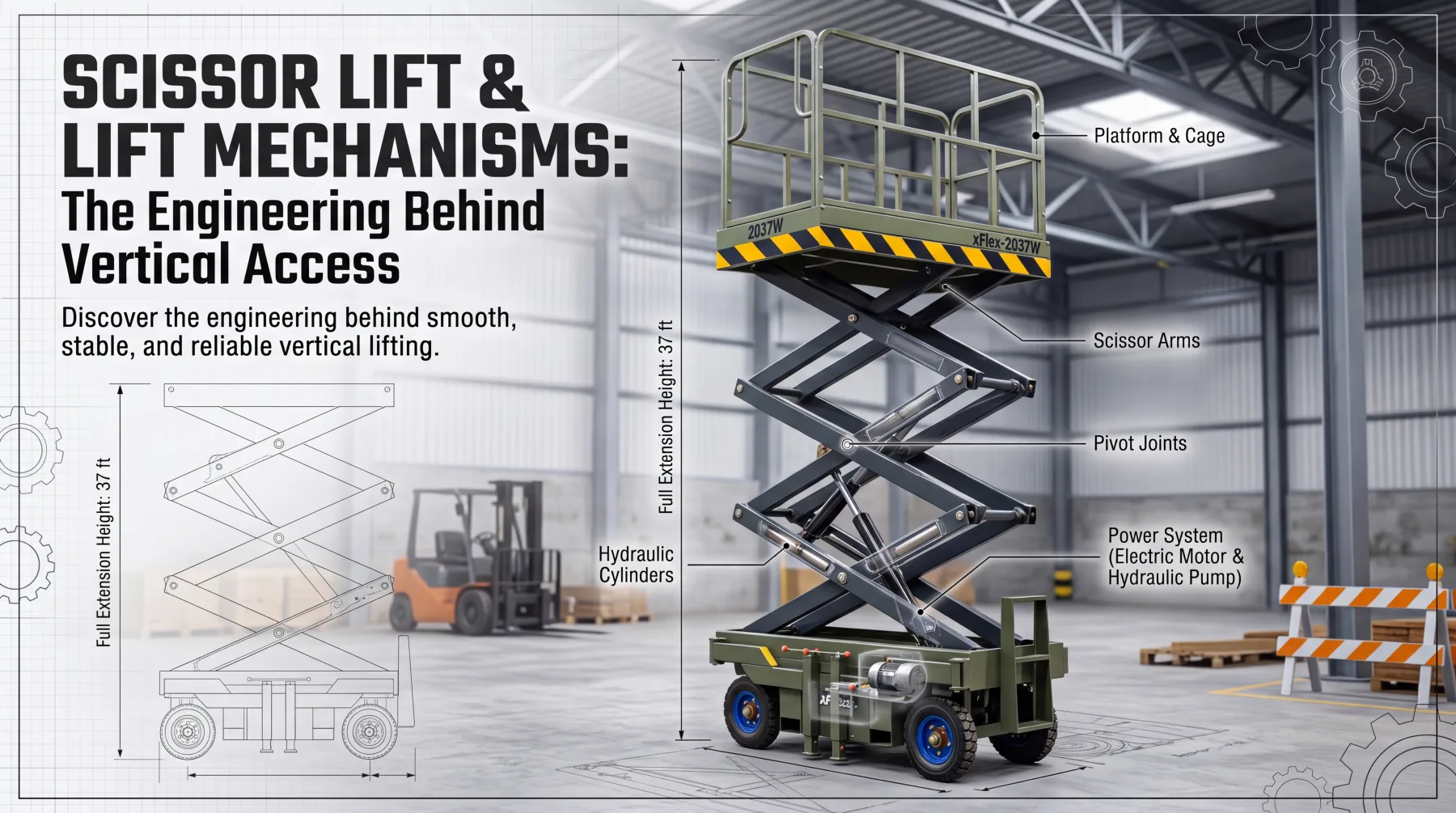
A scissor lift makes raising people and materials to height look effortless, yet behind that smooth vertical motion sits a clever, dependable piece of engineering. The crisscrossing arms, the power system that drives them, and the components working in concert all combine to deliver stable, controlled lifting job after job. Understanding how these mechanisms work helps you operate the machine more confidently, spot potential problems early, and choose the right lift for your needs. This guide walks you through the basic operating principle, the hydraulic and electric systems that power these machines, the key components that make lifting possible, and the maintenance that keeps everything running reliably for years.
How Scissor Lift Lift Mechanisms Work
At the heart of every scissor lift is a simple yet ingenious design: a set of crisscrossing support arms arranged in an X pattern, stacked one above another. These linked arms give the machine its name, since they open and close much like the blades of a pair of scissors. When the mechanism activates, the arms extend and push against one another, expanding upward to raise the platform. When it reverses, the arms contract and fold back down, lowering the platform in a smooth, controlled descent. This folding-and-unfolding action is what allows a compact machine to reach impressive working heights.
The power system is what drives this expansion and contraction. Rather than lifting the platform directly, the power source applies force to the lower section of the scissor arms, pushing them apart. Because the arms are linked at their pivot points, that force travels up through the entire stack, multiplying the movement so a modest push at the base translates into significant vertical travel at the top. This is the principle that makes the design so efficient and effective.
What sets the scissor mechanism apart is the stability it provides. Because the crisscrossing arms distribute the load evenly and keep the platform level throughout its travel, the lift rises and lowers along a steady vertical path rather than swaying or tilting. The wide base and the interlocking geometry of the arms give the machine a solid, balanced foundation, so workers and materials stay secure at every height. This combination of straightforward operation and dependable stability is exactly why scissor lifts remain a trusted choice for elevated work across so many industries.
Hydraulic Lift Mechanisms
Hydraulic scissor lifts are the most common type in demanding applications, and for good reason. These machines rely on pressurized hydraulic fluid to do the heavy work of raising the platform. A pump pressurizes the fluid and directs it into one or more hydraulic cylinders positioned at the base of the scissor arms. As the fluid fills the cylinders, it forces the cylinder rods to extend, and that extension pushes the scissor arms apart, driving the platform upward. To lower the lift, the system releases fluid from the cylinders in a controlled manner, allowing the arms to fold and the platform to descend smoothly.
The advantages of this hydraulic approach are significant, which explains its widespread use on heavy-duty machines. Hydraulic systems generate tremendous force from a relatively compact setup, giving these lifts high lifting capacity suited to substantial loads and multiple workers. Consider what makes hydraulic mechanisms so capable:
- High lifting capacity for heavy loads, tools, and multiple occupants.
- Smooth, controlled operation during both raising and lowering.
- Consistent power that holds the platform steady under load.
- Durability well matched to tough, continuous industrial use.
This strength and smoothness make hydraulic scissor lifts a dependable choice for a wide range of environments, both indoors and outdoors. On construction sites, in warehouses, at maintenance facilities, and across industrial settings, hydraulic lifts handle demanding work reliably. Their ability to lift heavy loads steadily and hold position securely under pressure gives operators confidence when working at height. Because the hydraulic system delivers such controlled, powerful movement, these machines perform predictably shift after shift, which is precisely what heavy-duty applications require. When the job calls for serious lifting capacity and rugged performance in challenging conditions, the hydraulic scissor lift remains the trusted workhorse of the category.
Electric and Mechanical Lift Systems
Not every scissor lift relies on hydraulic power. Many compact and lighter-duty machines use electric or mechanical lift systems that take a different approach to raising the platform. Instead of pressurized fluid and cylinders, these designs use electric motors to drive the scissor arms, often through a screw drive or an electric actuator. In a screw-drive system, the motor turns a threaded rod, and as the rod rotates, it moves a component along its length that pushes the scissor arms open. Actuator-based systems work on a similar principle, using powered electric actuators to extend and retract the mechanism directly.
These electric and mechanical systems are commonly found on smaller machines built for indoor and light-duty work. They are especially popular in retail spaces, warehouses, offices, and other environments where clean, quiet operation matters. Because they do not use hydraulic fluid, there is no risk of fluid leaks staining floors or contaminating sensitive areas, which makes them well suited to finished interiors and applications where cleanliness is a priority. Their typically lower noise levels also make them a comfortable choice for occupied spaces.
Electric systems differ from hydraulic designs in both maintenance and performance, and understanding those differences helps you match the right machine to your work. On the maintenance side, electric lifts avoid the fluid checks, hose inspections, and leak monitoring that hydraulic systems require, which often simplifies their upkeep. In terms of performance, they generally suit lighter loads and lower heights rather than the heavy-duty capacity that hydraulic machines provide. This trade-off makes electric and mechanical lifts an efficient, practical option for the specific jobs they are designed for, delivering clean, dependable lifting where power demands are modest and the working environment favors quiet, fluid-free operation.
Key Components That Make the Lift Work
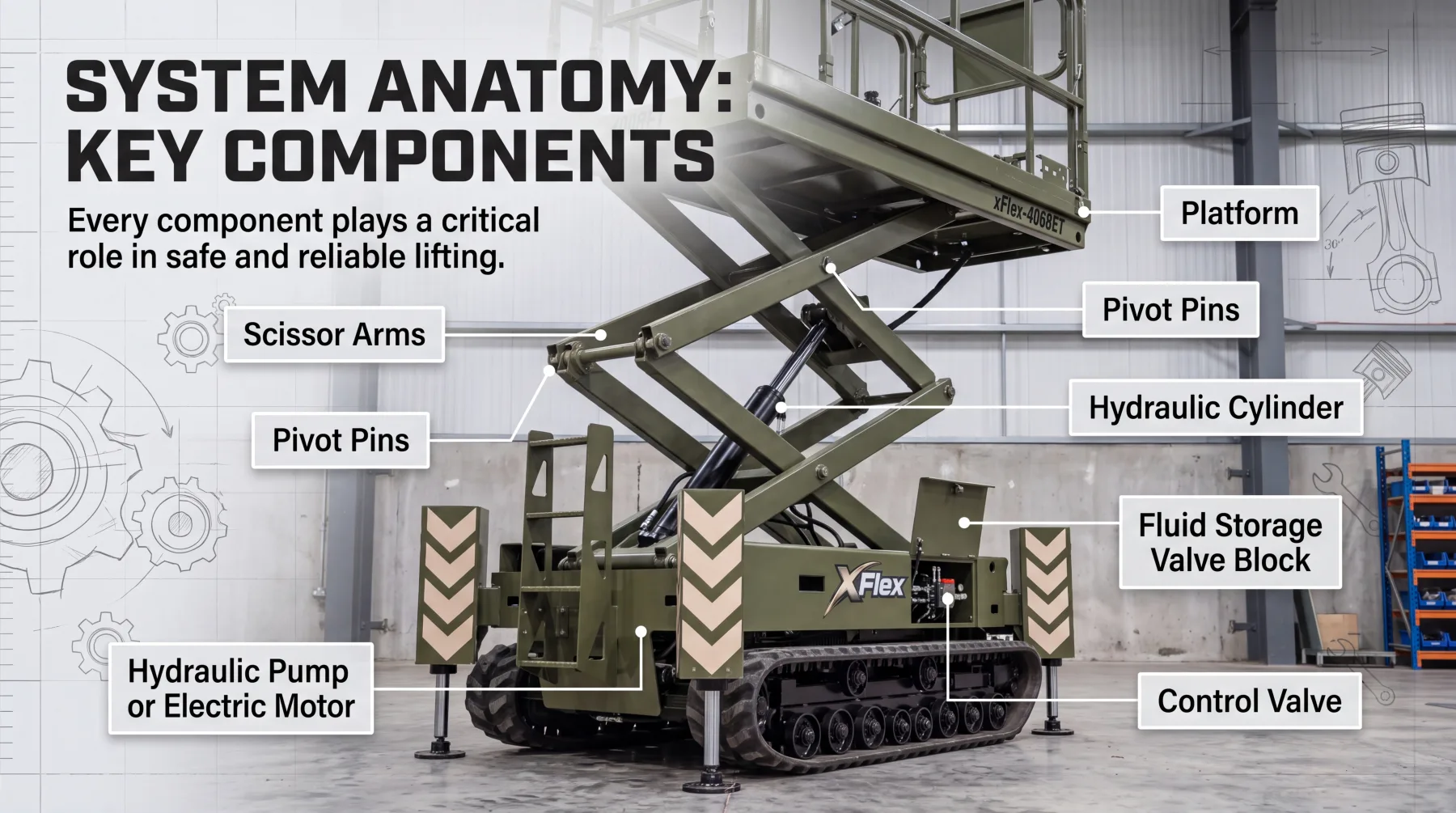
A scissor lift performs reliably because several well-engineered components work together as a coordinated system. Each part has a specific role, and understanding how they interact reveals why the machine lifts so safely and predictably. The scissor arms are the visible heart of the mechanism, the crisscrossing members that expand and contract to raise and lower the platform. They are connected at their intersections by pivot pins, which allow the arms to rotate against one another smoothly while bearing the load throughout every lift.
On hydraulic machines, the power components bring the mechanism to life. The pump pressurizes the hydraulic fluid, the hydraulic cylinders convert that pressure into the physical force that extends the arms, and control valves regulate the flow of fluid to manage the speed and direction of movement. On electric models, motors take the place of the pump and cylinders, driving the screw or actuator that moves the arms. The platform sits atop the whole assembly, providing the stable, level surface where workers and materials rest during operation.
Seeing how these parts contribute individually makes the whole system clearer:
- Scissor arms expand and contract to create vertical movement.
- Pivot pins connect the arms and allow them to rotate under load.
- Hydraulic cylinders convert fluid pressure into the force that lifts the platform.
- Pumps and motors supply the power that drives the mechanism.
- Control valves regulate fluid flow to control lifting speed and direction.
- The platform provides a secure, level working surface at height.
The safety and reliability of a scissor lift depend on all of these components working in harmony. When the pump, cylinders, valves, arms, and pins operate as designed, the platform rises and lowers smoothly and holds position securely. This coordinated teamwork is what allows the machine to support workers confidently at height, which is exactly why keeping every component in good condition matters so much.
Maintaining Lift Mechanisms for Long-Term Performance
Keeping a scissor lift’s mechanism in excellent condition is the surest way to protect both its performance and the safety of everyone who uses it. Routine maintenance focuses on the parts that do the hard work of lifting, and staying consistent with these checks prevents small issues from developing into serious failures. Hydraulic hoses deserve close attention on fluid-powered machines, since they carry pressurized fluid throughout the system. Inspecting them regularly for cracks, wear, bulges, and damp spots lets you catch a weakening hose before it fails and leaves the machine inoperable.
Fluid levels and lubrication are equally important to smooth, dependable operation. On hydraulic lifts, checking the hydraulic fluid level and condition ensures the system maintains proper pressure and responds correctly during every lift, so top up or replace fluid according to the manufacturer’s guidance. The pivot points where the scissor arms rotate also need regular lubrication, because these high-stress joints endure constant load and movement. Keeping them properly greased reduces friction, prevents metal-on-metal wear, and keeps the arms moving freely as the platform rises and lowers.
Monitoring for wear and leaks ties the whole maintenance routine together. Watch closely for the early warning signs that a component needs attention:
- Hydraulic leaks appear as drips or damp spots around hoses, cylinders, and fittings.
- Worn pivot pins or bushings that show play or produce unusual noise.
- Fluid degradation or low levels affecting lifting performance.
- Wear on the scissor arms or mounting points that could weaken the structure.
Addressing these issues promptly, before they escalate, is what keeps the mechanism working efficiently and extends the life of the equipment. A lift that receives consistent inspection, proper lubrication, and clean, well-maintained fluid rewards you with steady, reliable performance and fewer costly interruptions. Building these practices into a regular maintenance schedule protects your investment, safeguards your operators, and ensures the machine remains dependable throughout its working life.
Conclusion
Understanding how a scissor lift’s mechanism works gives you a genuine appreciation for the engineering that makes safe, stable lifting possible. The crisscrossing scissor arms expand and contract to raise and lower the platform, driven by either a hydraulic system that uses pressurized fluid and cylinders for heavy-duty capacity, or an electric system that relies on motors and screw drives for cleaner, lighter-duty work. Behind every smooth lift, key components including the arms, pivot pins, cylinders, pumps, motors, control valves, and platform all work together to keep the machine dependable and secure. Consistent maintenance, from inspecting hoses and checking fluid to lubricating pivot points and watching for wear, keeps that mechanism performing at its best for years. With this knowledge, you are better equipped to operate, care for, and choose a scissor lift with confidence.