
When Should You Replace Your Forklift Battery? Key Warning Signs
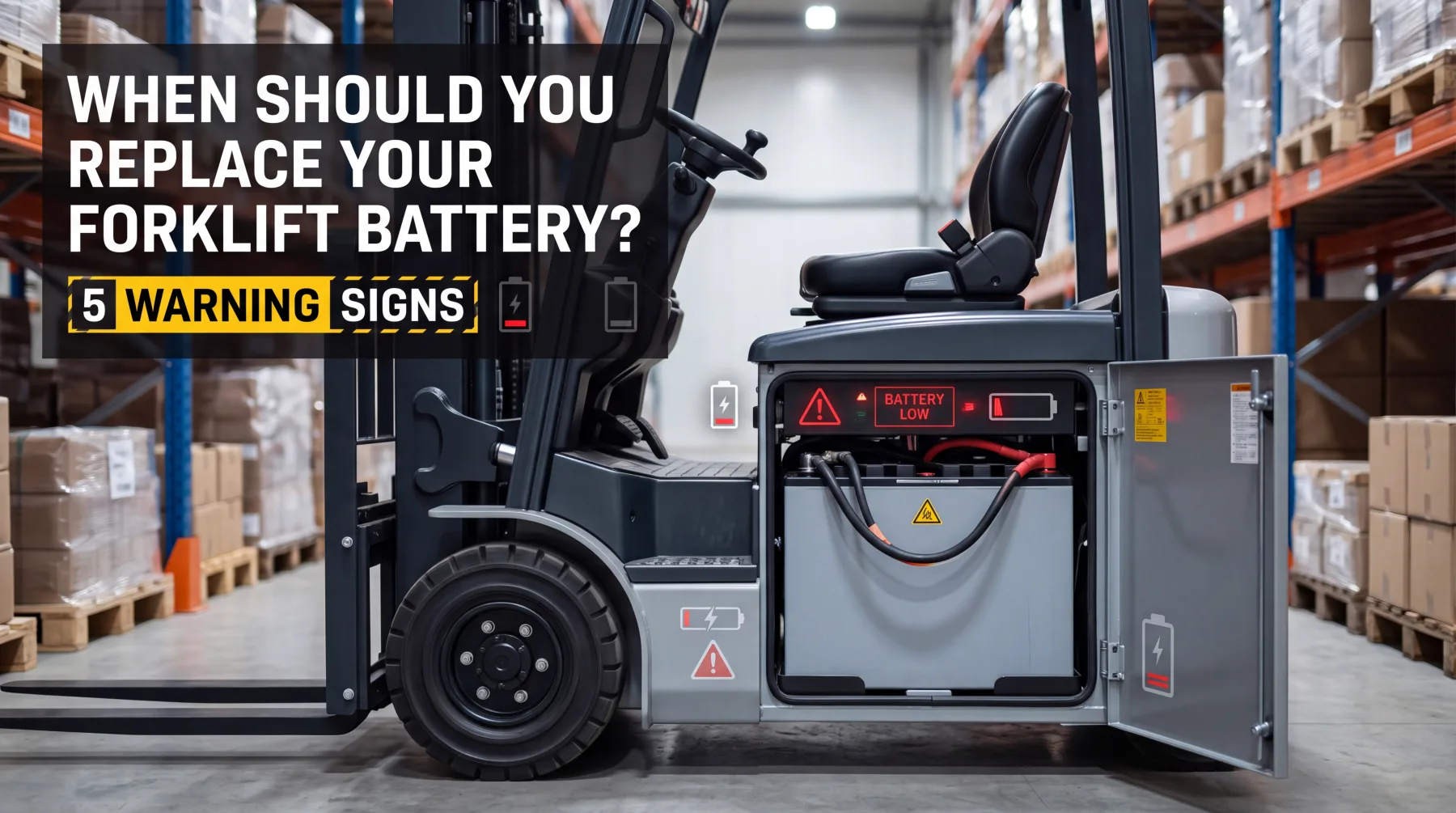 A forklift battery is the heart of your electric lift truck, and when it starts to fade, your whole operation feels it. Slower cycles, mid-shift charging breaks, and unexpected downtime all trace back to a battery that’s nearing the end of its useful life. The tricky part is knowing when a battery simply needs better care and when it genuinely needs replacing. Catch the warning signs early, and you avoid the productivity losses and safety risks that come with pushing a failing battery too far. This post walks through five clear signals that it’s time to consider a replacement, so you can plan ahead, protect your uptime, and keep your equipment running safely and efficiently.
Shortened Runtime Between Charges
One of the earliest and most reliable signs of a failing forklift battery is a noticeable drop in how long it runs between charges. A healthy battery, properly maintained, should comfortably power your forklift through a full shift. When a battery that once lasted eight hours suddenly struggles to make it through five or six, its ability to hold a charge is slipping. This gradual decline is a normal part of a battery’s aging process, but once it starts affecting your daily operation, it deserves serious attention.
The reason behind shortened runtime is straightforward. Over hundreds of charge and discharge cycles, the internal components of a lead-acid battery wear down, and the plates lose some of their capacity to store energy. Each cycle takes a small toll, and eventually the cumulative effect becomes impossible to ignore. You’ll notice operators needing to swap or recharge batteries partway through a shift, interrupting workflow and cutting into productivity that you’re paying for.
Watch for these patterns that point to declining runtime:
- Mid-shift recharging that never used to be necessary becomes a routine part of the day.
- Fewer hours per charge even when charging habits and workloads stay the same.
- Operators report that the battery “just doesn’t last like it used to.”
If you’re tracking these changes and the runtime keeps falling despite proper charging and watering, the battery is likely reaching the end of its dependable service life. A battery that can no longer support a full shift forces workarounds that cost time and money every single day, and at that point, replacement usually makes far more sense than continuing to work around the shortfall.
Slow or Weak Forklift Performance
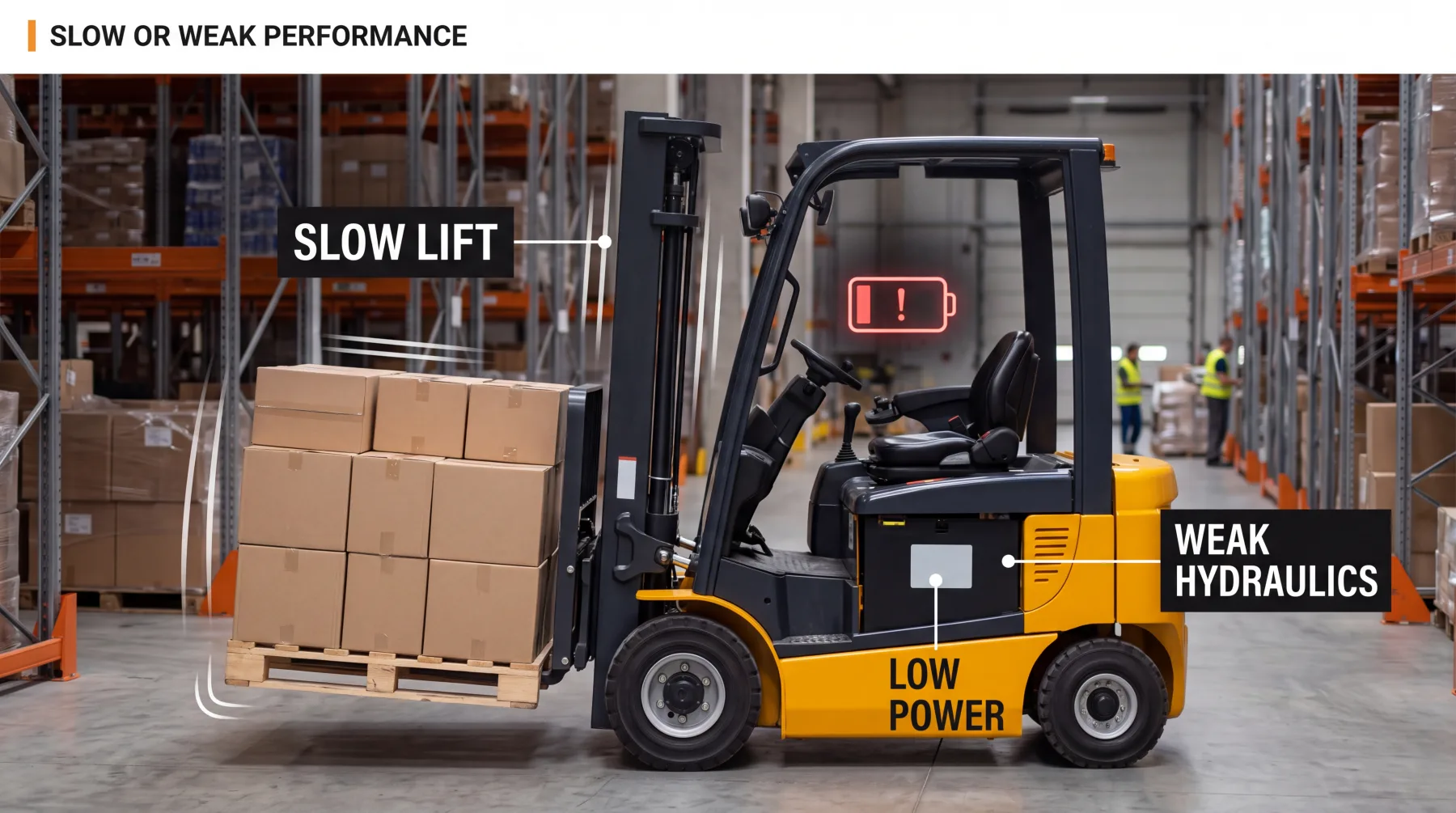
When a forklift starts feeling sluggish, the battery is often the culprit. A battery in good condition delivers steady, consistent power to every system on the machine, from the drive motor to the hydraulics. As it weakens, that power supply becomes unreliable, and the effects show up directly in how the forklift handles. Operators are usually the first to notice, describing the machine as feeling “tired” or unresponsive compared to how it performed when the battery was healthy.
The symptoms tend to appear across several functions at once, since every powered system draws from the same source. You might see reduced lifting power, where the forks raise more slowly or struggle with loads the truck once handled easily. Travel speed can drop, making the forklift feel underpowered as it moves through the facility. Hydraulic performance often suffers too, with slower tilt and lift functions that make precise work frustrating and time-consuming.
Common performance warning signs include:
- Reduced lifting power, with the mast raising loads more slowly or straining under normal weights.
- Sluggish travel speed, leaving the truck feeling weak even on flat, clear ground.
- Weak hydraulics, showing up as slow or jerky lift and tilt movements.
These issues matter for more than just convenience. A forklift that can’t deliver full power slows down every task, dragging down the productivity of your entire operation. There’s a safety dimension as well, because inconsistent lifting and handling can make loads harder to control. If you’ve ruled out other mechanical problems and the performance drop tracks with an aging battery, it’s a strong signal that the battery can no longer supply the power your forklift needs, and a replacement will restore the reliable operation your team depends on.
Excessive Charging Requirements
The way a battery charges tells you a great deal about its health, and rising charging demands are a telltale sign of decline. A battery in good shape follows a predictable charging routine, reaching a full charge within an expected window and holding that charge through the workday. When you notice the battery needing to charge more often, or taking noticeably longer to reach full capacity, its internal condition is deteriorating and its usable capacity is shrinking.
This happens because an aging battery becomes less efficient at both storing and accepting energy. As the plates degrade and internal resistance increases, the charger has to work harder and longer to push the battery to full, and even then the battery holds less than it used to. The result is a frustrating cycle where you spend more time charging and get less productive use in return. For operations running tight schedules, this extra charging time can create real bottlenecks, tying up chargers and forcing longer waits between shifts.
There’s also a cost angle worth considering. Longer, more frequent charging consumes more electricity, quietly raising your energy expenses even as the battery delivers less work. A battery that once charged overnight and ran all day but now demands top-ups and extended charging sessions is signaling that its capacity is fading. When charging behavior changes this way despite consistent maintenance and proper charger function, the battery is telling you it’s wearing out. At that point, continuing to nurse it along usually costs more in lost time and higher energy use than simply replacing it with a fresh, efficient battery that charges predictably and powers a full shift again.
Visible Battery Damage
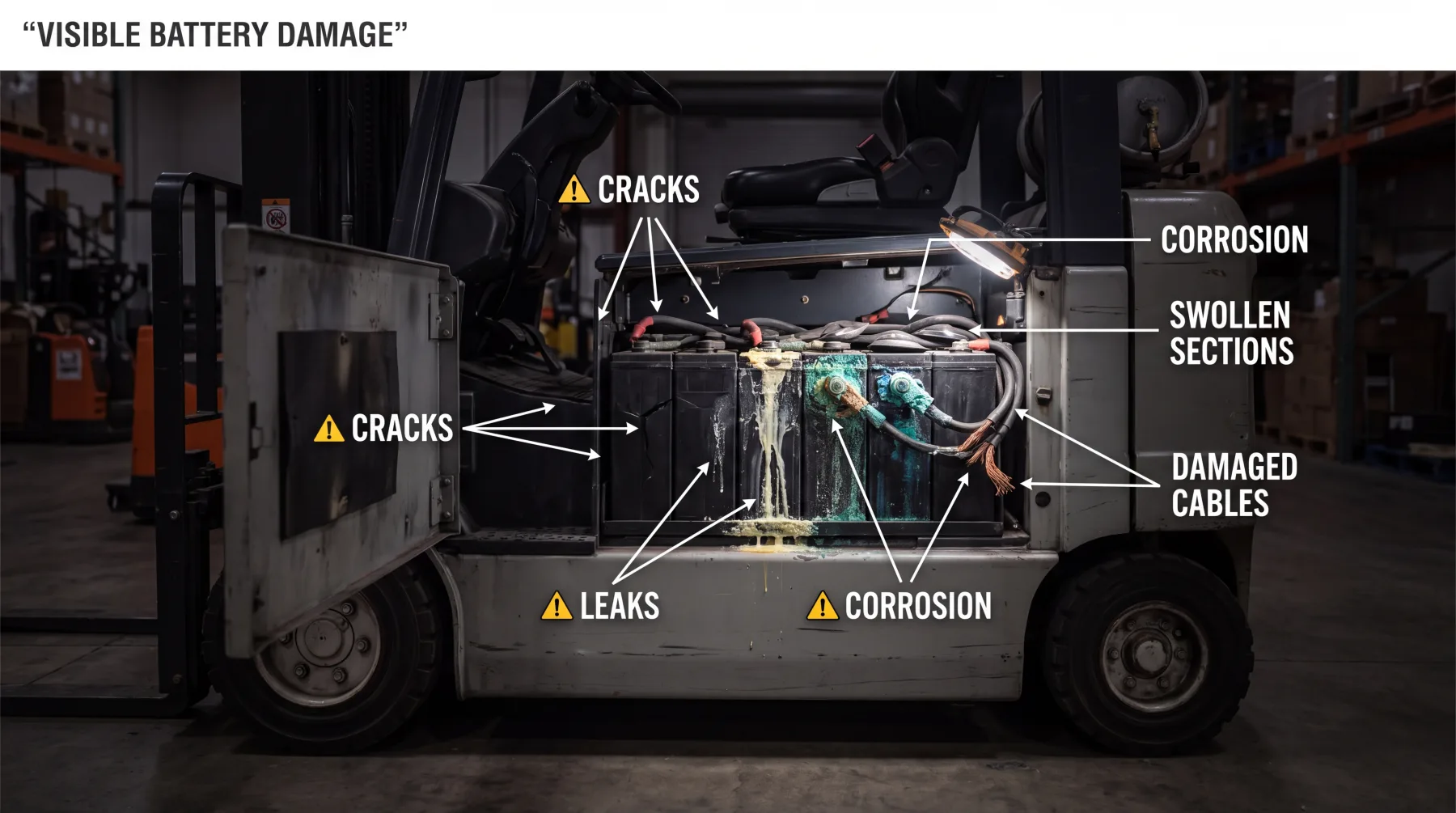
Some warning signs require careful tracking over time, but others are plain to see during a routine inspection. Visible physical damage to a forklift battery is among the most serious signals that replacement is needed, and it should never be ignored. Unlike a gradual capacity decline, physical damage can pose immediate safety hazards, including the risk of acid leaks, electrical faults, and even fire. Regular visual inspections are essential precisely because they catch these problems before they turn dangerous.
Several types of visible damage indicate a battery that has reached the end of its safe service life:
- Cracks in the battery case, which can allow electrolyte to escape and expose internal components.
- Leaks of acid or electrolyte, a hazardous condition that demands immediate attention.
- Corrosion around terminals and connections, which interferes with power flow and worsens over time.
- Swollen or bulging components, often a sign of overcharging or internal failure.
- Damaged cables or connectors, which create both performance problems and safety risks.
Any one of these findings is cause for concern, and several appearing together strongly suggests the battery needs to be retired.
The danger with physical damage is that it rarely improves on its own; it only gets worse with continued use. A small crack can widen, a minor leak can spread, and corrosion can eat away at critical connections until the battery becomes unreliable or unsafe. Beyond the safety risks to your operators and facility, a physically compromised battery simply can’t deliver dependable performance. When an inspection reveals damage like this, the responsible choice is to remove the battery from service and replace it promptly. Protecting your team and maintaining a safe workplace always outweighs the short-term savings of squeezing a little more life out of a damaged battery.
Rising Maintenance Costs
Every forklift battery requires some upkeep, but there comes a point where maintenance costs signal that the battery has become a liability rather than an asset. When you find yourself repairing a battery frequently, replacing cables and connectors, addressing recurring problems, and still watching performance slip, the math starts to shift. The money and time poured into keeping an old battery running can quickly exceed what a replacement would cost, making continued repair a poor investment.
The pattern usually builds gradually. Early in a battery’s life, maintenance is routine and predictable: watering, cleaning, and occasional minor fixes. As the battery ages, though, the repairs grow more frequent and more expensive, and each one buys less improvement than it used to. You might fix one issue only to face another shortly after, all while runtime and power continue to decline. This combination of climbing costs and falling performance is a clear economic signal that the battery has outlived its value.
Consider the total picture when weighing repair against replacement. Factor in not just the direct repair bills but also the downtime each repair causes, the lost productivity from a weak battery, and the higher energy costs of an inefficient one. When you add these together, a battery that seems “cheaper to fix” often turns out to be far more expensive to keep than to replace. A new battery restores full runtime, dependable power, and predictable maintenance, eliminating the constant drain of an aging one. When repairs become a recurring expense and performance keeps declining despite your best efforts, replacing the battery is almost always the more cost-effective decision, protecting both your budget and your operation’s productivity over the long run.
Conclusion
Knowing when to replace your forklift battery protects your productivity, your budget, and your team’s safety. The warning signs tend to build together: shortened runtime between charges, slow or weak forklift performance, excessive charging demands, visible physical damage, and rising maintenance costs that outpace the value of keeping the battery in service. Individually, any one of these deserves attention. Together, they make a compelling case that it’s time for a replacement. The smartest approach is to monitor your battery’s performance, inspect it regularly, and plan ahead rather than waiting for a failure to force your hand. A healthy battery keeps your forklift running at full capacity through every shift. When yours starts showing these signs, act promptly, and you’ll keep your operation moving safely and efficiently for years to come.
Frequently Asked Questions
- How long should a forklift battery last before it needs replacing?
A well-maintained lead-acid forklift battery typically lasts around five years or roughly 1,500 charge cycles, though actual lifespan depends heavily on usage, charging habits, and maintenance. Batteries that are properly watered, charged correctly, and allowed to cool between cycles tend to reach the upper end of that range. If yours shows the warning signs described above well before that mark, poor charging practices or heavy use may be shortening its life.
- Can I fix a forklift battery instead of replacing it?
Sometimes. Minor issues like corroded terminals, loose connections, or low electrolyte levels can often be corrected with routine maintenance. However, problems like declining capacity, cracked cases, leaks, or swollen cells generally can’t be repaired reliably. When repairs become frequent and performance keeps dropping despite your efforts, replacement is usually the more cost-effective and safer choice.
- What happens if I keep using a failing forklift battery?
Continuing to run a failing battery leads to reduced productivity, frequent downtime, and higher energy costs, since the battery works harder while delivering less. More importantly, a damaged battery can create serious safety hazards, including acid leaks, electrical faults, and fire risks. Replacing a battery once it shows clear warning signs protects both your operation’s efficiency and your team’s safety.